

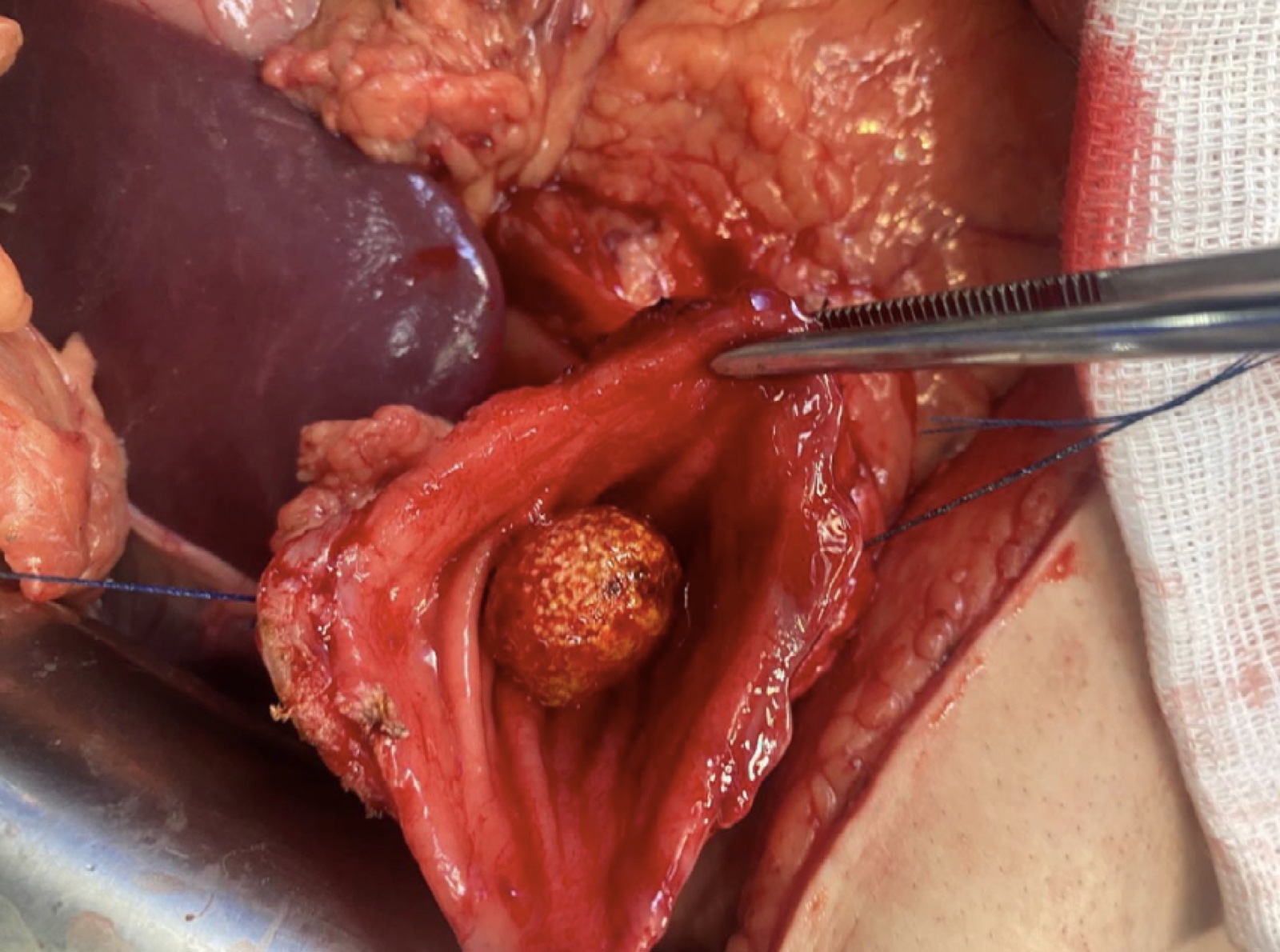
A doença ulcerosa péptica (DUP) apresenta diferentes espectros de evolução e gravidade. A dor epigástrica é a queixa mais importante do paciente e pode estar associada a outras complicações, como hemorragias, perfurações e estenose, além de comorbidades. Atualmente, a incidência de evolução para formas graves e complicações da DUP diminuiu significativamente, principalmente devido ao uso indiscriminado de inibidores da bomba de prótons. Os autores relatam um caso incomum de um paciente do sexo masculino, de 36 anos, com DUP e estenose duodenal associada à colelitíase complicada. Após a liberação das aderências hepáticas, foi identificada uma fístula colecistoduodenal e a presença de um grande cálculo biliar impactado no duodeno (1,2 cm), caracterizado como síndrome de Bouveret. A técnica de Finsterer-Bancroft-Plenk foi escolhida, com preservação e mucosectomia do antro, fechamento do duodeno, seguida de gastrectomia parcial com reconstrução em Y de Roux, vagotomia troncular, colecistectomia e sutura duodenal para correção da fístula colecistoduodenal.
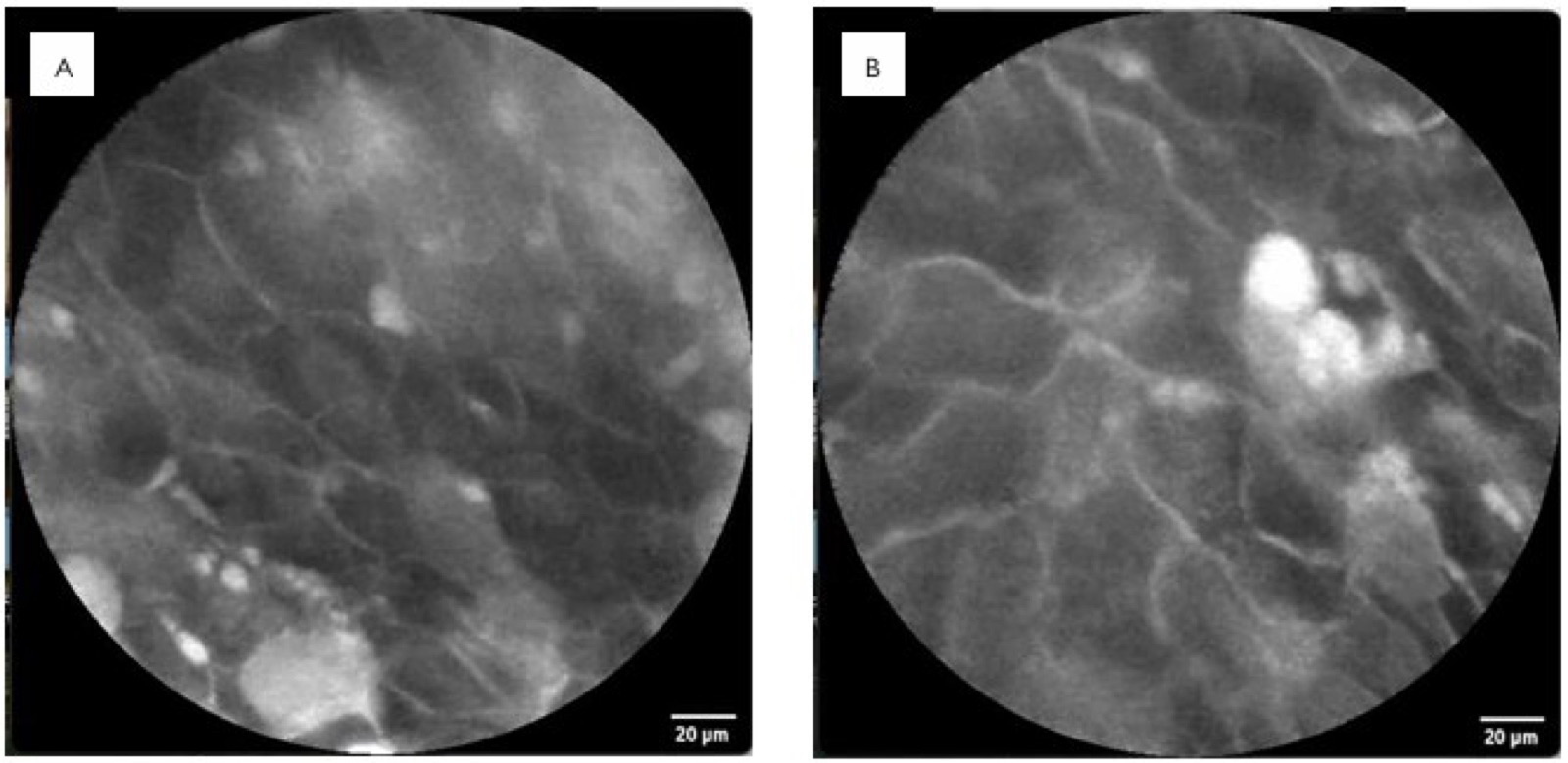
Uterus transplantation is a relatively new procedure, with successful births performed using living donors in Sweden since 2014 and a deceased donor, for the first time in Brazil, in 2016. Probe-based confocal endomicroscopy is considered an optical biopsy method (with 1000 times magnification), allowing detailed visualization of tissue cytoarchitecture and microvascular patterns at a penetration depth of approximately 50 to 60 μm. The application of confocal endomicroscopy to the uterine cervix emerges as a promising alternative to weekly cervical examinations in the follow-up of patients who have undergone uterus transplantation. The authors report the case of a 34-year-old woman with Mayer-Rokitansky-Küster-Hauser (MRKH) syndrome, diagnosed at 15 years of age, who in August 2026 underwent the first successful live-donor uterus transplantation performed in Latin America. The surgical procedure was uneventful. The confocal endomicroscopy of the uterine cervix was employed to evaluate its potential utility in identifying inflammatory changes that might precede graft rejection. No irregular or distorted epithelium or severe inflammation was observed, and this finding was confirmed by biopsies and histological analysis. They concluded that the probe-based confocal endomicroscopy may support more effective and individualized post-transplant management, representing a meaningful advancement in the fields of regenerative medicine and transplantation.
Heterotopic gastric mucosa of the proximal esophagus (HGMPE) is a congenital island of salmon-colored, abnormally located gastric epithelium, commonly present distally to the upper esophageal sphincter (UES). It can vary from microscopic and small foci to extensive and circumferential patches11.
Most are largely asymptomatic8, found incidentally during esophagogastroduodenoscopies (EGD), with an underestimated prevalence ranging from 2.6 to 21%1,9.
However, it can lead to complications such as bleeding, ulceration, neoplastic transformation, acid production, and laryngopharyngeal reflux, specifically chronic cough, throat discomfort, hoarseness, globus sensation, and regurgitation3.
Secretion can be acidic, as demonstrated by pH monitoring, and proton pump inhibitor may improve pharyngeal manifestations7, but non-acidic mucus can also lead to symptoms2.
The inlet patch is commonly a potential site for Helicobacter pylori infection. It is closely related to active inflammation and associated with H. pylori infection in the stomach5. The fact that HGMPE is commonly missed in EGDs can be explained, since it is located in the upper esophagus, a difficult area to examine due to the UES contraction, and is commonly neglected during device removal.
Endoscopic stent placement has become a well-established treatment in the management of biliary tract obstruction8. Complications such as pancreatitis, hemorrhage, duodenal perforation, or cholangitis can occur in up to 10% of insertions4,6,8. Iatrogenic perforation of the portal vein during the procedure or stent migration to the portal system are unusual complications, and due to scarce reports in the literature, there is no consensus on how to manage it1,2,11.
Here, we present a case of portal thrombosis secondary to an accidental portal insertion of a biliary stent. The study was approved by the Ethics Committee of the Institution (number 76693423.1.0000.0068).
A 44-year-old female presented in another medical institution with acute upper abdominal pain, jaundice, and vomiting, and was diagnosed with mild acute biliary pancreatitis. Magnetic resonance imaging (MRI) showed choledocholithiasis. As the jaundice persisted, she underwent endoscopic retrograde cholangiopancreatography (ERCP). After undergoing papillotomy and plastic stent placement, the clinical jaundice subsided. The clinical report did not mention technical difficulties.
After 4 months, the patient was referred to our outpatient facility due to upper abdominal pain and generalized pruritus. Blood tests showed: total bilirubin, 2.06 mg/dL (reference range, 0.2-1.2 mg/dL); direct bilirubin, 1.0 mg/dL (up to 0.5 mg/dL); indirect bilirubin, 1.1 mg/dL (0.2-0.7 mg/dL); alkaline phosphatase, 270 U/L (40-150 U/L), and gamma-glutamyl transferase, 431 U/L (12-64U/L).
Pancreas divisum is an anatomical abnormality where the junction of the main and accessory pancreatic duct fails to occur and the smaller-caliber duct acts as dominant, resulting in overload during the drainage of the organ’s secretion through the minor duodenal papilla.
To report a case of recurrent acute pancreatitis due to symptomatic pancreas divisum who underwent pancreatoduodenectomy.
A 21-year-old male patient presented with intermittent painful crises, located in the upper abdomen, with radiation to the back, associated with nausea and vomiting, for the past three years. Magnetic resonance imaging and endoscopic retrograde cholangiopancreatography revealed pancreas divisum, subsequently confirmed by endoscopic ultrasound. An attempt was made through endoscopic intervention but failed to catheterize the minor papilla; therefore, a pancreaticoduodenectomy was indicated. The organ was identified as hard and atrophied, with moderate peripancreatic inflammation. The histopathological findings also identified a focal well-differentiated G1-type neuroendocrine tumor measuring 0.4 cm.
In patients with pancreas divisum, rare cases may progress to recurrent acute pancreatitis. Pancreaticoduodenectomy is an option in symptomatic patients who had no success with endoscopic treatment.
It is essential to reevaluate old concepts that, over time, become unquestionable truths. This is particularly important in the treatment of asymptomatic cholelithiasis, where an expectant, non-surgical approach is commonly recommended. We should therefore commend and congratulate the authors of the article “ASYMPTOMATIC CHOLELITHIASIS: EXPECTANT OR CHOLECYSTECTOMY. A SYSTEMATIC REVIEW,” published in the Brazilian Archives of Digestive Surgery (Arq Bras Cir Dig. 2023;36:e1747), for promoting the discussion of one of the most prevalent digestive disorders in the adult population.
Although it is a controversial topic in clinical practice, we agree with the authors’ conclusion that “the majority of evidence points to the safety and feasibility of a conservative (clinical follow-up) management of asymptomatic cholelithiasis”1. However, we need to consider that some variables are not always taken into consideration in systematic reviews, which can prejudice obtaining more robust conclusions.
It is important to note that there are no clinical trials directly comparing surgical and expectant treatments for asymptomatic cholelithiasis. In most cases, prophylactic cholecystectomy is not recommended due to the low risk of serious complications and the generally mild initial symptoms. The evidence supporting this recommendation, however, largely originates from studies conducted in the 1970s and 1980s, before the advent of laparoscopic surgery. For instance, in 1983, Ransohoff et al.7 concluded that conventional prophylactic cholecystectomy decreased patient survival based on a model analyzing the natural history of cholelithiasis. This type of study is now considered outdated considering the advancements in surgical techniques.
The standardization of laparoscopic surgery has drastically reduced the risks and complications associated with cholecystectomy, making it the prime example of the benefits of minimally invasive surgical techniques. Currently, serious complications of laparoscopic cholecystectomy, such as bile duct injuries, bleeding, and inadvertent bowel injuries, have an incidence of less than 0.5%. Surgical wound infection rates are also significantly lower compared to the open technique4,9. Additionally, the “critical view of safety” approach has been an ally in reducing harm and training new surgeons2.
Insulinomas are rare neoplasms of the endocrine pancreas. Minimally invasive treatment options for insulinomas have gained prominence, replacing surgical resection due to its associated morbidity and mortality. Radiofrequency ablation (RFA) has emerged as a relevant treatment option. We present a case of a female patient with neuroglycopenic symptoms and severe hypoglycemic crises. The abdominal magnetic resonance imaging (MRI) showed a small nodular lesion in the pancreatic body. Laparotomy was performed, followed by RFA using a 15-mm active-tipped needle. No complications transpired, and no hypoglycemic episodes were observed during 12 months of follow-up.
Despite endoscopic eradication therapy being an effective and durable treatment for Barrett’s esophagus-related neoplasia, even after achieving initial successful eradication, these patients remain at risk of recurrence and require ongoing routine examinations. Failure of radiofrequency ablation and argon plasma coagulation is reported in 10–20% of cases.
Large tumors located in the right liver lobe may preclude the safe performance of right trisectionectomy due to a small left lateral segment remaining. First reported by Makuuchi et al. in 1980, embolization of the right portal vein (PV) is performed to trigger contralateral hypertrophy and enable the performance of right trisectionectomy6. The obstruction of the left PV due to inadvertent migration of embolizing agents following right portal vein embolization (PVE), as preparation for resection of large unresectable colorectal liver metastasis (CRLM), may preclude curative liver resection1.
The ALPPS (Associating Liver Partition and Portal vein Ligation for Staged hepatectomy) procedure usually induces fast hypertrophy of the left liver remnant8,10. Inclusion criteria are patients with extensive bilobar colorectal liver metastases and a predicted future liver remnant <30%. A rare case of utilization of the ALPPS procedure as rescue surgery after a failed PVE is reported herein.
A 54-year-old female presented with a large metachronous CRLM involving right hemiliver and segment IVa, 22 months after a left hemicolectomy. After a 4-cycle oral FOLFIRI chemotherapy, she was evaluated for a right trisectionectomy, but the future liver remnant (FLR=22%) was deemed as insufficient. To induce FLR hypertrophy, right PVE guided by ultrasound was performed through peripheral right PV branches and superselective catheterization of anterior and posterior portal branches employing polyvinyl alcohol particles (ContourT, Boston Scientific, Cork, Ireland®). A mixture of cyanoacrylate glue and lipiodol was injected under fluoroscopic guidance. Portography revealed adequate right PVE.
Four weeks later, a computed tomography (CT) scan revealed thrombosis of left PV small branches secondary to migration of embolizing material inside LPV (Figures 1A, 1B), explaining the lack of hypertrophy of the left hemiliver (FLR=25%). Balloon angioplasty and stent placement in the LPV were carried out (Figures 2A, 2B).

ALPPS10 was taken out seven weeks later (Figure 3A) (predicted FLR=29% two weeks thereafter). Then, a right trisectionectomy was operated as ALPPS completion (Figure 3B).
One month later, a CT scan identified a non-occlusive thrombosis compromising the inferior vena cava (from the left hepatic vein to the left common iliac vein). Rivaroxaban was initiated and kept for 6 months, and patient was discharged home 41 days after the hepatectomy. The patient received an 8-cycle FOLFIRI adjuvant scheme. She remains stable, with no signs of recurrent disease or thrombosis 21 months after the procedure. This study was approved by the Institutional Board (number 2017-0271), and the patient signed informed consent for this report.
Complete resection of CRLM is the best treatment to achieve long term survival3,5. Resection of adjacent structures may be necessary in order to achieve free tumor margins2. In some cases, whatsoever insufficient FLR due to a small left lateral segment may preclude such approach.
PVE is used in order to induce contralateral lobe hypertrophy, aiming to achieve a safe FLR volume. However, such hypertrophy is not always reached. PVE generally triggers a 20 to 40% increase in FLR. With the advent of ALLPS, patients previously considered non-operative candidates are now being able to benefit from a complete tumor resection. Even if the patient experiences a failed or insufficient PVE, “salvage ALPPS” can still be carried out9. A higher morbi-mortality should be expected in such cases, though4. Due to previous PVE, only liver partition is generally performed without the need for PV ligation.
Rolinger et al. presented a case of inadvertent nontarget portal thrombosis of the FLR following PVE. An ALPPS procedure with concomitant thrombectomy of the left portal vein was used as a rescue strategy for this patient, concluding that it can be used in the event of technical failures or complications following PVE, even in patients with perihilar carcinoma7. In the case reported herein, ALPPS was utilized in a scenario of failed PVE. Salvage ALPPS may be a therapeutic option for failed PVE even in the event of inadvertent contralateral migration of embolizing material.
LETTER TO THE EDITOR
Extrahepatic biliary cystadenocarcinoma mimicking Klatskin tumor
Sergio Renato Pais-Costa; Sandro Jose Martins; Sergio Luiz Melo Araujo; Olímpia Alves Teixeira Lima; Marcio Almeida Paes; Marcio Lobo Guimaraes
Hospital Santa Lucia, Brasília, DF, Brazil
Correspondence
INTRODUCTION
Biliary cystadenocarcinoma (BCAC) is a very rare malignant cystic neoplasm. Some authors think this particular neoplasm was conversion of biliary cystadenoma over several years of evolution. In the majority of the cases, it habitually occurs in the liver parenchyma (intrahepatic cystadenocarcinoma); sometimes can be observed extrahepatic biliary origin3,4,6,7,8,10,11 extrahepatic biliary cystadenocarcinoma, (EBCAC), which generally leads jaundice associated with palpable mass1,2,5,6,9. In the past, the diagnosis was done by means of endoscopic retrograde cholangiopancreatography. However, actually the computed tomography or even nuclear magnetic resonance are preferred due non-invasive approaches1,2,3,4,5,6,7,8,9,10.
Sometimes, EBCAC has difficulties on differential diagnosis with cholangiocarcinoma, mainly when occurs in the hepatic hilum6. The surgical treatment provides good prognosis; however, en-bloc biliary tract resection with hepatectomy may be necessary to get free margins3,6,10. To date, was not found any case reported in Brazil, nor successful operation using a en-bloc biliary resection with hepatectomy to treat it.
CASE REPORT
A 54 year-old caucasian man presented with painless obstructive jaundice and hepatic palpable mass which began one month before. Liver functions tests showed elevated bilirubin levels of 14,8 ng/dl, alkaline phosphatase of 1067 U/l, gamma-glutamyl transferase of 550 U/l, AST of 175 U/l, and ALT 143 U/l. The alpha-fetoprotein was normal while Ca19,9 was high about 345 U/l. The patient underwent a computed tomography that showed a cystic lesion with irregularity and thickened wall in conjunction with dilated intrahepatic bile ducts mainly left side with atrophy of left lobe. Subsequently, he was submitted a cholangioresonance that showed dilatation of intrahepatic biliary tree more significant at the left side biliary duct with irregularity and thickened wall close to hepatic confluence (Figure 1). The patient underwent radiological examination without signals of systemic dissemination. Therefore, main diagnosis was hilar cholangiocarcinoma or extrahepatic biliary cystadenoma or cystadenocarcinoma. Surgical treatment was indicated, and resection of the suprapancreatic biliary tree including hilar confluence and en-bloc extended left hepatectomy with caudate lobectomy was performed. A formal hilar lymphadenectomy was also realized during surgical resection (Figure 2). One self limited biliary leakage was observed, and treated by conservative management. The patient was discharged at 15th postoperative day. Definitive histological examination showed cystadenocarcinoma of left hepatic duct with free margins (Figure 3). Immunohistochemical studies showed positive reactions for carcinoembryonic antigen (CEA), cytokeratin 19 and CA 19.9. No postoperative adjuvant treatment was performed. To date, one year of follow-up, the patient is alive without tumor recurrence.
DISCUSSION
BCAC is a rare malignant epithelial neoplasm of bile ducts. Takayasu et al.9 reported an incidence of 0,41 % among all hepatic malignant epithelial tumors. Almost all of these tumors are intrahepatic while the minority arise in the major bile ducts or even gallbladder (extrahepatic origin). EBCAC arise more frequently hepatic confluence or even sectorial duct (left or right) than gallbladder1,3,6,7,8,10. There are few reports on literature about these uncommon neoplasms1,2,3,4,5,6,7,8,9,10. Especially in Brazil, no case was reported. Azambuja et al.1 reported a single case but this tumor was an intrahepatic BCAC1. This tumor is more frequently observed in middle-aged people and may occur in both gender having a less favorable prognosis in man3. In accordance to Devaney et al.4 there are at least two well-defined types of hepatobiliary cystadenocarcinoma. One developing exclusively in female patients, usually accompanied by an "ovarian-like" stroma, which follows an indolent course and the other, lacking the distinct cellular stroma, seen in males, follows an aggressive biological behavior that may result in the patient's death from tumor10.
While intra-hepatic BCAC leads abdominal mass or pain, EBCAC leads generally obstructive jaundice that may eventually be accompanied by symptoms. More lately, it may lead weight loss and ascites that denotes advanced disease1,3,6,7,8,10.
Despite its rarity, EBCAC should remind as differential diagnosis with hilar cholangiocarcinoma in patients who present high obstructive jaundice as the present case10. Like this tumor present more loco-regional dissemination than distant metastasis1,10.
Histological, BCAC are characterized by papillary projections with a multilayered cell lining with foci of dysplasia and moderate mitotic activity10. In BCAC most tumor cells were positive on immunohistochemical staining for cytoqueratin, epithelial membrane antigen, CA 19.9 and carcinoembryonic antigen4.
Although the diagnosis is histological and may be confirmed by immunohistochemistry, image examinations may contribute for suspect diagnosis. Computed tomography and more recently magnetic cholangioresonance may reveal multilocular cystic lesion with internal septations or nodularities. More rarely, as the case described, an unilocular lesion may be observed6. Some authors have suggested that presence of nodules or coarse calcifications along the wall or septa favor the BCAC2,6. However, as reported Tseng et al.10, EBCAC may be confounded with hilar cholangiocarcinoma because may lead dilatation of the intrahepatic biliary ducts and atrophy of the affected lobe such as observed in present case. Different from Tseng et al.10, the present authors observed no hepatolithiasis in this case. The real cause of atrophy of the left hepatic lobe was unknown.
Tseng et al.10 suggested that the tumor would lead compression of the left trunk of the portal vein that could deviate hepatic flow for right lobe. As this case of the EBCAC, it presents a difficult differential diagnosis with common hilar cholangiocarcinoma because on image examinations EBCAC may be confounded due intense dilatation of intra-hepatic biliary tree. Independently of the diagnosis as EBCAC as hilar cholangiocarcinoma, the treatment has been total resection of the lesion with free margins, because partial resection has been associated a high levels of recurrence and dismal prognosis1,2,3,4,5,6,7,8,9. Generally, surgical resection may be associated with hepatectomy, due proximity of the hepatic parenchyma3,10. Radical resection is the only curative treatment and may be associated either cure or long-term survival1,2,3,4,5,6,7,8,9. The overall prognosis may be good since a radical resection is performed, as in the present case.
REFERENCES




Developed by Surya MKT

