

Dysbiosis of the gut microbiota is frequently found in cases of obesity and related metabolic diseases, such as type 2 diabetes mellitus. The composition of the microbiota in diabetics is similar to that of obese people, thereby causing increased energy uptake efficiency in the large intestine of obese people, maintenance of a systemic inflammatory state, and increased insulin resistance. Bariatric surgery seems to entail an improvement in gut dysbiosis, leading to an increased diversity of the gut microbiota.
This study aimed to present a literature review on obesity-associated gut dysbiosis and its status post-bariatric surgery.
A systematic review of primary studies was conducted in PubMed, SciELO, BIREME, LILACS, Embase, ScienceDirect, and Scopus databases using DeCS (Health Science Descriptors) with the terms “obesity,” “intestinal dysbiosis,” “bariatric surgery,” and “microbiota.”
We analyzed 28 articles that had clinical studies or literature reviews as their main characteristics, of which 82% (n=23) corresponded to retrospective studies. The sample size of the studies ranged from 9 to 257 participants and/or fecal samples. The epidemiological profile showed a higher prevalence of obesity in females, ranging from 24.4 to 35.1%, with a mean age of around 25–40 years. There was a variation regarding the type of bariatric surgery, migrating between the Roux-en-Y bypass, adjustable gastric banding, and vertical gastrectomy. Of the 28 studies, 6 of them evaluated the gut microbiota of obese patients undergoing bariatric surgery and their relationship with type 2 diabetes mellitus/glucose metabolism/insulin resistance.
The intestinal microbiota is an important influencer in the regulation of the digestive tract, and obese individuals with comorbidities (diabetes mellitus, hypercholesterolemia, and metabolic syndrome) present important alterations, with an unbalance normal state, generating dysbiosis and the proliferation of bacterial species that favor the appearance of new diseases. Patients who undergo bariatric surgery present an improvement in the intestinal microbiota imbalance as well as reversibility of their comorbidities, increasing their life expectancy.
Bariatric surgery is the most effective treatment for weight loss and also promotes remission of preoperative metabolic comorbidities.
The aim of this study was to analyze preoperative comorbidities, evaluate postoperative outcomes, and assess complications 6 months after bariatric surgery in a hospital in the state of Santa Catarina, Brazil.
A retrospective cohort study was conducted with patients who underwent bariatric surgery between 2021 and 2022 and were followed up for a period of 6 months after the procedure.
There was a predominance of female patients (81.6%), with a mean age of 38.7 years. The preoperative prevalence of hypertension, Type 2 diabetes, dyslipidemia, and hepatic steatosis was 36.7, 22.4, 22.4, and 32.7%, respectively. The postoperative remission rates for these conditions were 55, 64, 70, and 69%, respectively. Except for diabetes, no significant differences were found between the Roux-en-Y gastric bypass (RYGB) and sleeve gastrectomy (SG) groups. There was a significant reduction in weight (p<0.01) and body mass index (BMI) (p<0.01), with no statistical differences between the RYGB and SG groups. Postoperative complications occurred in 73.5% of patients, including anemia, vitamin deficiencies, cholelithiasis, dumping syndrome, anastomotic ulcer, chronic diarrhea, and anastomotic stricture.
The study described the preoperative comorbidity profile, postoperative outcomes, and complications with findings consistent with existing literature, except for underreporting dyslipidemia and hepatic steatosis. No statistical difference was observed between the surgical techniques performed.
Bariatric surgery is currently the gold standard for the treatment of obesity. However, weight recurrence varies among the different surgical methods.
To compare changes in weight one and two years after bariatric surgery considering the gastric bypass and gastric sleeve methods.
A cross-sectional study was conducted at a hospital with adults of both sexes followed up for two years after surgery. Anthropometric, sociodemographic, clinical, and lifestyle characteristics were analyzed.
A total of 184 patients, predominantly women (82.1%), were assessed (136 submitted to gastric sleeve and 48 to gastric bypass). Good adherence to the multivitamin, but not to diet or physical activity, was verified in both groups. The percentages of weight loss and excess weight loss were higher in the gastric bypass group (one year after surgery: p<0.001 and p=0.010, respectively; two years after surgery: p<0.001 and p<0.001, respectively). Average weight gain was 2.37 kg and higher after gastric sleeve (p=0.042), whereas no difference between methods was found for the percentage of weight recurrence. Weight loss and recurrence at the two-year follow-up were influenced by diet in both groups. The percentage of weight loss was higher after gastric bypass one and two years after surgery. Weight recurrence was higher after the gastric sleeve method, without interfering with the surgical success of the technique.
We verified greater efficacy in the gastric bypass technique in terms of weight loss at 12 and 24 months postoperatively. Weight recurrence was found 24 months after both methods, especially in the gastric sleeve group, without constituting surgical failure.
Obesity and type 2 diabetes mellitus are highly prevalent conditions with a significant public health impact, highlighting the need for effective management strategies. Bariatric surgery is widely recognized for promoting sustained weight loss and high rates of type 2 diabetes mellitus remission.
This study investigated the preoperative blood glucose response to a very low-calorie diet as a functional predictor of type 2 diabetes mellitus remission following Roux-en-Y gastric bypass.
198 participants who followed a very low-calorie diet (600 kcal/day) during the preoperative period were included, with glycemic response monitoring.
Complete remission of type 2 diabetes mellitus occurred in 66.7% of patients. Two years after surgery, patients with blood glucose levels below 143 mg/dL on the second day of the very low-calorie diet had a higher likelihood (over 70%) of achieving complete remission type 2 diabetes mellitus in the late postoperative period.
Preoperative capillary blood glucose levels demonstrated good specificity in predicting remissions. These findings reinforce the clinical utility of early glycemic control as a valuable indicator for predicting the success of surgical treatment for type 2 diabetes mellitus.
Exocrine pancreatic insufficiency (EPI) is a condition characterized by reduced exocrine secretion, leading to decreased food digestion, and digestive tract surgeries can be a cause. Postoperative “de novo” EPI is defined as the onset of digestive symptoms following surgeries, which show significant improvement after the initiation of pancreatic enzyme replacement therapy (PERT). The diagnosis of postoperative EPI may be delayed due to mild or nonspecific symptoms, both in pancreatic surgeries and in upper abdominal surgeries.
The aim of this study was to conduct a systematic review on the diagnosis and treatment of “de novo” EPI related to digestive surgeries, in collaboration with the development of a consensus among the main surgical societies in Brazil.
The steering committee developed 10 questions related to two areas of interest: diagnosis and treatment. A systematic review was conducted for each of the domains. The evidence was assessed for quality using the GRADEpro tool. Recommendations were formulated for each of the questions. The final report was reviewed by representatives of the surgical societies for the consolidation and approval of the recommendations through a modified Delphi system.
“De novo” EPI should be considered in case of the onset of postoperative digestive symptoms. Diagnostic methods vary in complexity of execution, with varying sensitivity and specificity in the postoperative condition. Fecal Elastase-1 (FE-1) has limited value in diagnosing EPI in the postoperative setting. PERT can be initiated based on clinical suspicion, and there is no difference in approach regarding the type of surgery performed. PERT should be started at the appropriate dose for the intensity of symptoms and adjusted up or down according to symptom control. Proper treatment of EPI leads to symptom improvement and an increase in quality of life. PERT should be maintained as long as patients have a favorable clinical response.
The recommendations encompass the diagnosis and treatment of “de novo” EPI and can serve as a basis for the establishment of educational programs led by the participating surgical societies.
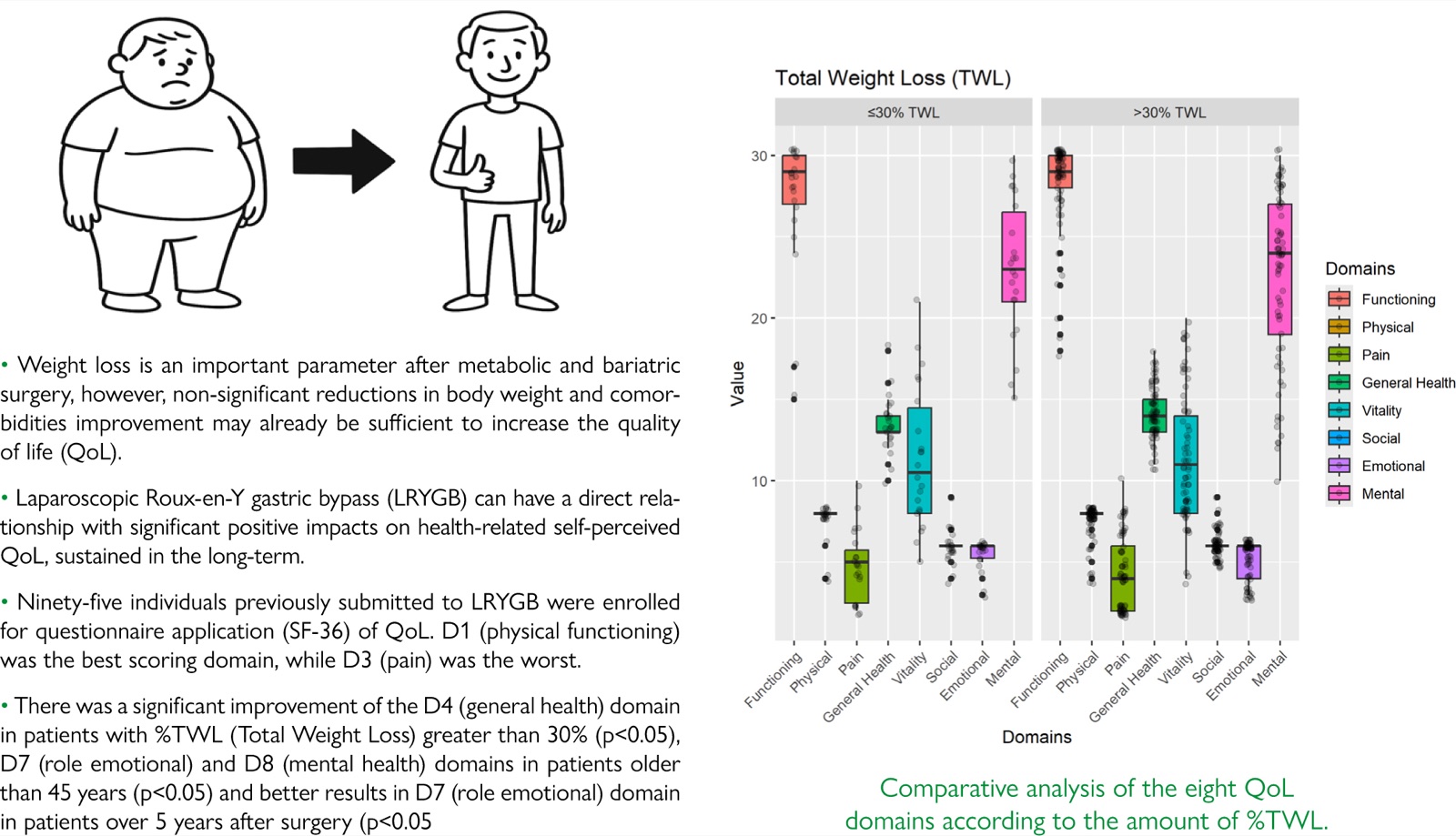
Weight loss (WL) is the most commonly used datum to measure the results of metabolic and bariatric surgery. The amount of WL is generally directly and proportionally associated with the improvement in quality of life (QoL), as the greater the former, the greater the perception of well-being.
To assess the relationship between the amount of weight lost after laparoscopic Roux-en-Y gastric bypass (LRYGB) and self-perceived improvement in quality of life (QoL).
The medical records of patients who underwent LRYGB between January 2017 and December 2019 with a minimum follow-up of 3 years were analyzed. The data obtained in the subgroups made up according to percentage of total weight loss (%TWL), age, and time elapsed since surgery were compared with the self-perceived QoL by the Short Form Survey 36 (SF-36) questionnaire.
A total of 95 individuals (71.6% women) with an average age of 45 years and an average postoperative (PO) follow-up of 61.1 months were enrolled. The mean pre- and postoperative weight was 114 kg and 73.4 kg, respectively, and the mean %TWL was 35.6%. According to the comparison between the data from the medical records and the self-perceived QoL assessment, D1 (physical functioning) was the best scoring domain, while D3 (pain) was the worst. There was a significant improvement of the D4 (general health) domain in patients with %TWL greater than 30% (p<0.05), D7 (role emotional), and D8 (mental health) domains in patients older than 45 years (p<0.05) and better results in D7 (role emotional) domain in patients over 5 years after surgery (p<0.05).
Greater weight loss and age and longer time after surgery showed important self-perceived improvement in QoL after LRYGB in some assessment domains, both physical and emotional.
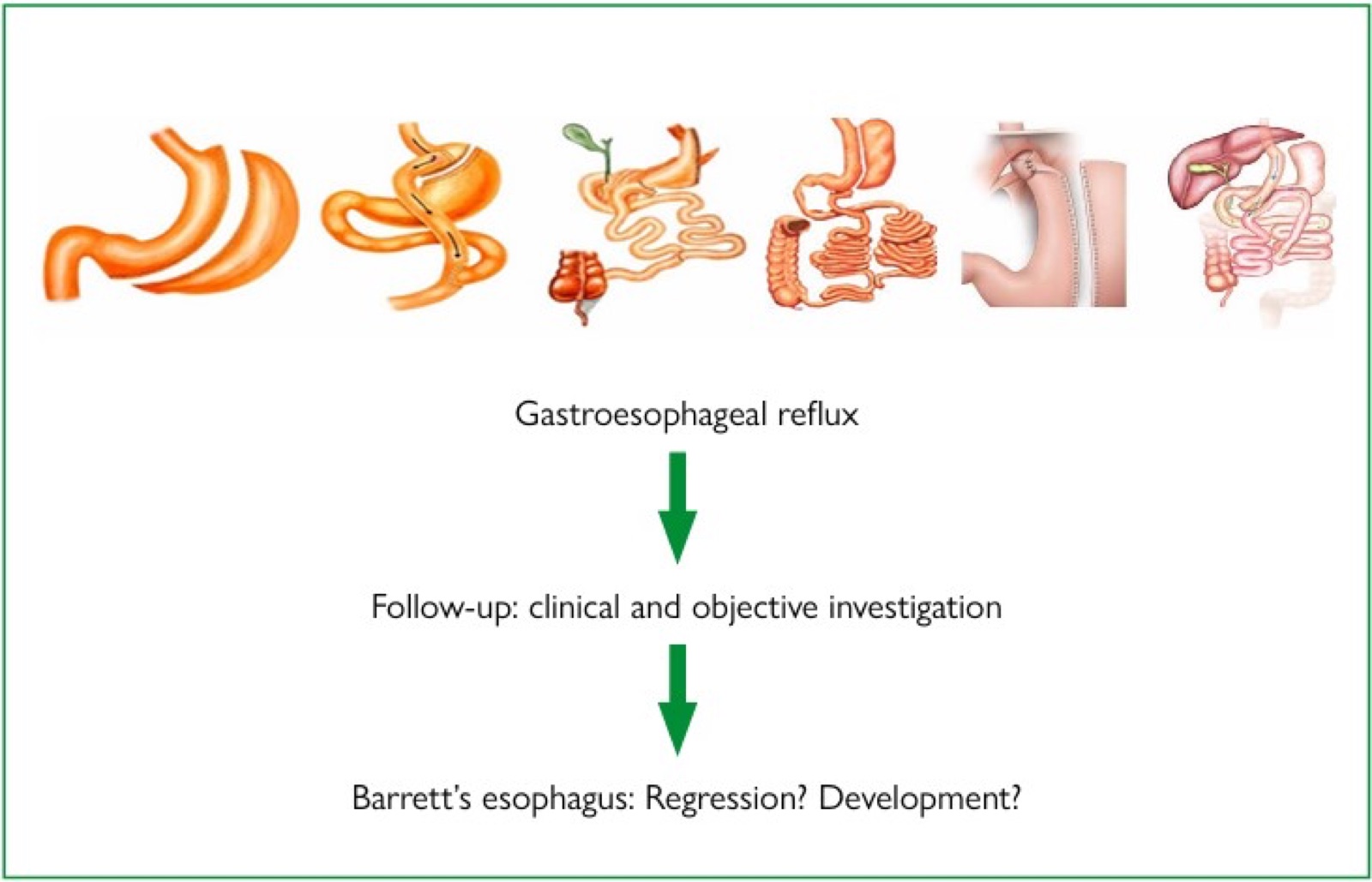
Studies have investigated the incidence of gastroesophageal reflux disease (GERD) and Barrett’s esophagus (BE) after common bariatric surgeries. However, many of these studies have bias or limitations. Therefore, it is crucial to determine the true incidence of GERD in long-term follow-ups (FUs) post-surgery.
The aim of this study was to review and summarize long-term data regarding the incidence of post-surgical GERD and BE after various bariatric procedures, discuss the characteristics of current information available, and establish the need for future studies to determine objective functional outcomes that have not yet been reported.
A narrative review was conducted using multiple electronic databases, including the review of 15 meta-analyses and over 200 articles.
The quality of studies analyzing GERD and BE following bariatric surgery varies widely. Some papers provide detailed outcomes, while others offer limited information. The reported rate of de novo postoperative GERD development after sleeve gastrectomy varies from 4.06 to 74.7% (mean=33.8±19.1), and the incidence of BE ranges from 0.2 to 27% (mean=8.2±7.5). After Roux-en-Y gastric bypass (RYGB), similar variability is observed, with BE incidence ranging from 1.6 to 17.5% (mean=7.5±5.9). In the case of one-anastomosis gastric bypass (OAGB), scarce information is available and most reports are incomplete. The incidence of erosive esophagitis ranges from 15 to 70%, with BE incidence reported in only two papers (1–9.5%). For procedures such as single-anastomosis duodeno-ileal bypass with sleeve gastrectomy (SADI-S), fundoplication-sleeve, or sleeve bipartition, few specific data are available, with most reports limited to symptoms and lacking findings such as esophagitis, hiatal hernia, or BE.
This revision provides evidence that SG may indeed lead to an increased risk of BE. Numerous studies suggest that RYGB protects against BE. Other bariatric procedures must be extensively evaluated. Relatively low quality of available literature on this topic was observed; therefore, well-controlled prospective studies with long-term FUs are necessary to fully understand the effect of bariatric surgery on BE.
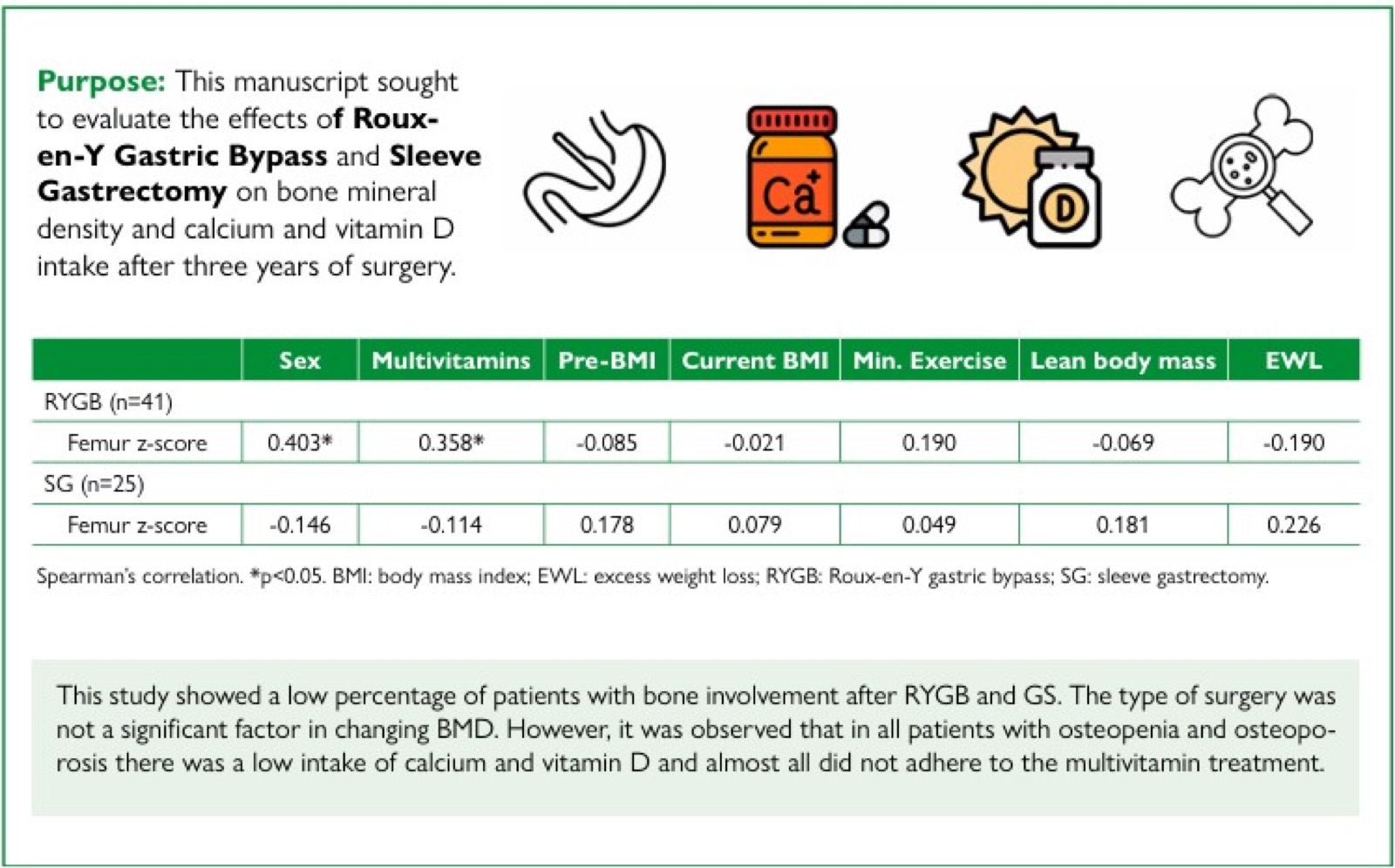
Malabsorption of micronutrients including calcium and vitamin D may lead to pathological bone fractures in the late postoperative period of bariatric surgery.
The aim of this study was to evaluate the effects of Roux-en-Y gastric bypass (RYGB) and sleeve gastrectomy (SG) on bone mineral density (BMD) and calcium and vitamin D intake after 3 years of surgery.
Cross-sectional study that included 66 patients in the late postoperative period of bariatric surgery to analyze their BMD. Anthropometric and demographic data were collected, and a 24-hour recall questionnaire was carried out to assess food consumption patterns. BMD was assessed by bone densitometry of the femur and spine, and the values were expressed as z-scores.
The mean age was 40.1 years, 86.4% were female. RYGB was performed in 60.3% and SG in 39.7%. There was no significant difference between the techniques when comparing anthropometry, body composition, and food consumption patterns. There was a positive correlation, after RYGB, between femoral z-score, calcium and vitamin D intake, and multivitamin supplementation. A total of 12.7% of the sample had compromised bones, and among these, 87.5% underwent RYGB, 100% had inadequate consumption of calcium and vitamin D, and 12.5% were in menopause.
A small percentage of the sample showed bone loss after RYGB and SG. The type of surgery was not a significant factor in changing BMD. However, all those affected had a low intake of calcium and vitamin D.
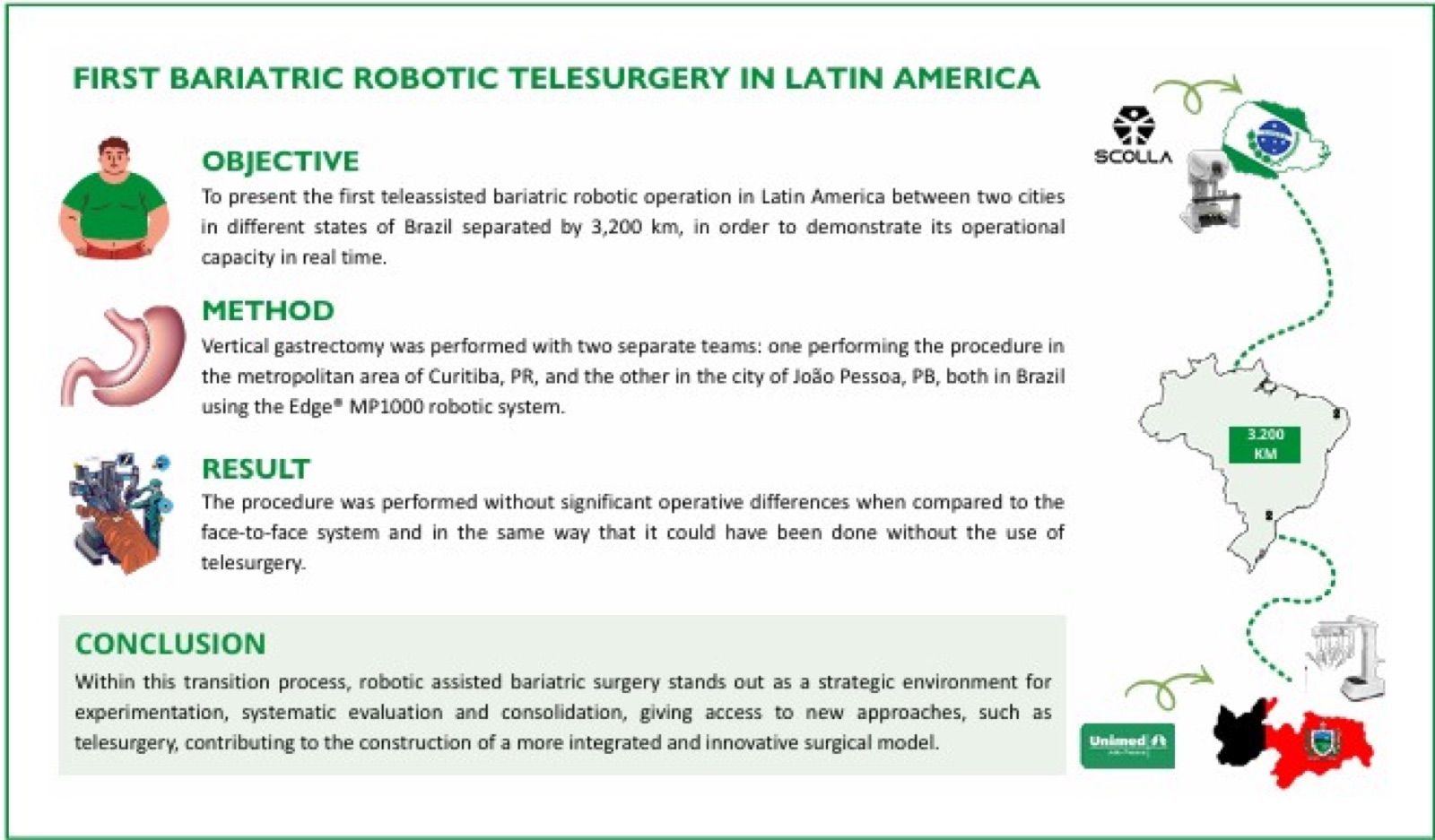
The use of robotic systems in bariatric surgery has reached a stage of maturity that supports its application with consistent results in the management of severe obesity. At the same time, the improvement of communication networks and digital support bases has renewed the debate on telesurgery as an alternative to extend the reach of specialized surgical care, particularly in contexts marked by the unequal concentration of highly complex services.
To present the first teleassisted bariatric robotic operation in Latin America between two states of Brazil separated by 3,200 km, in order to demonstrate its operational capacity in real time.
Vertical gastrectomy was performed with two separate teams: one performing the procedure in the metropolitan area of Curitiba (PR), and the other in the city of João Pessoa (PB), both in Brazil.
The procedure was performed without significant operative differences when compared to the face-to-face system and in the same way that it could have been done without the use of telesurgery.
Within this transition process, robotic assisted bariatric surgery stands out as a strategic environment for experimentation, systematic evaluation and consolidation, giving access to new approaches, such as telesurgery, contributing to the construction of a more integrated and innovative surgical model.
Obesity represents a chronic pro-inflammatory status that contributes to accelerated atherosclerosis and cell aging. Besides the widely used C-reactive protein and ferritin, other inflammatory markers have gained attention, such as neutrophil-to-lymphocyte ratio (NLR) and platelet-to-lymphocyte ratio (PLR), which are related with the degree of inflammation in various pathological conditions, including obesity and its comorbidities.
To compare and monitor the levels of NLR and PLR before and after sleeve gastrectomy (SG).
Retrospective study that included a total of 622 patients with obesity who underwent SG as primer bariatric surgery in our center. Data regarding the presence of comorbidities, including type 2 diabetes (T2D), high blood pressure (HBP) and non-alcoholic fatty liver disease (NAFLD), variations in body weight and body mass index (BMI), and biochemical markers of inflammation, including neutrophil-to-lymphocyte ratio (NLR), platelet-to-lymphocyte ratio (PLR) and C-reactive protein (CRP) were gathered. Values of NLR and PLR were correlated with weight loss and prognosis of comorbidities within the postoperative period.
The sample was predominantly female (79.3%) with average age 36.91±10.04 years, with comorbidities including HBP (25.1%), T2D (8.0%), and NAFLD (80.1%). Patients with HBP showed reduced NLR and CRP post-intervention, while those with T2D experienced decreased CRP but increased PLR. Correlation analysis found no significant correlation between BMI/weight changes and NLR but significant correlation with PLR. Post-surgery, NLR decreased for previously NAFLD patients, and PLR increased.
According to the results, patients with obesity present a significant decrease in NLR and an increase in PLR after SG.




Developed by Surya MKT