

Complete neoadjuvant treatment for gastric cancer is not always tolerated due to nutritional and clinical reasons, such as gastric outlet obstruction. In this context, upfront surgery becomes an alternative.
The aim of the study was to compare upfront resection with neoadjuvant systemic therapy followed by surgery and identify factors influencing their outcomes.
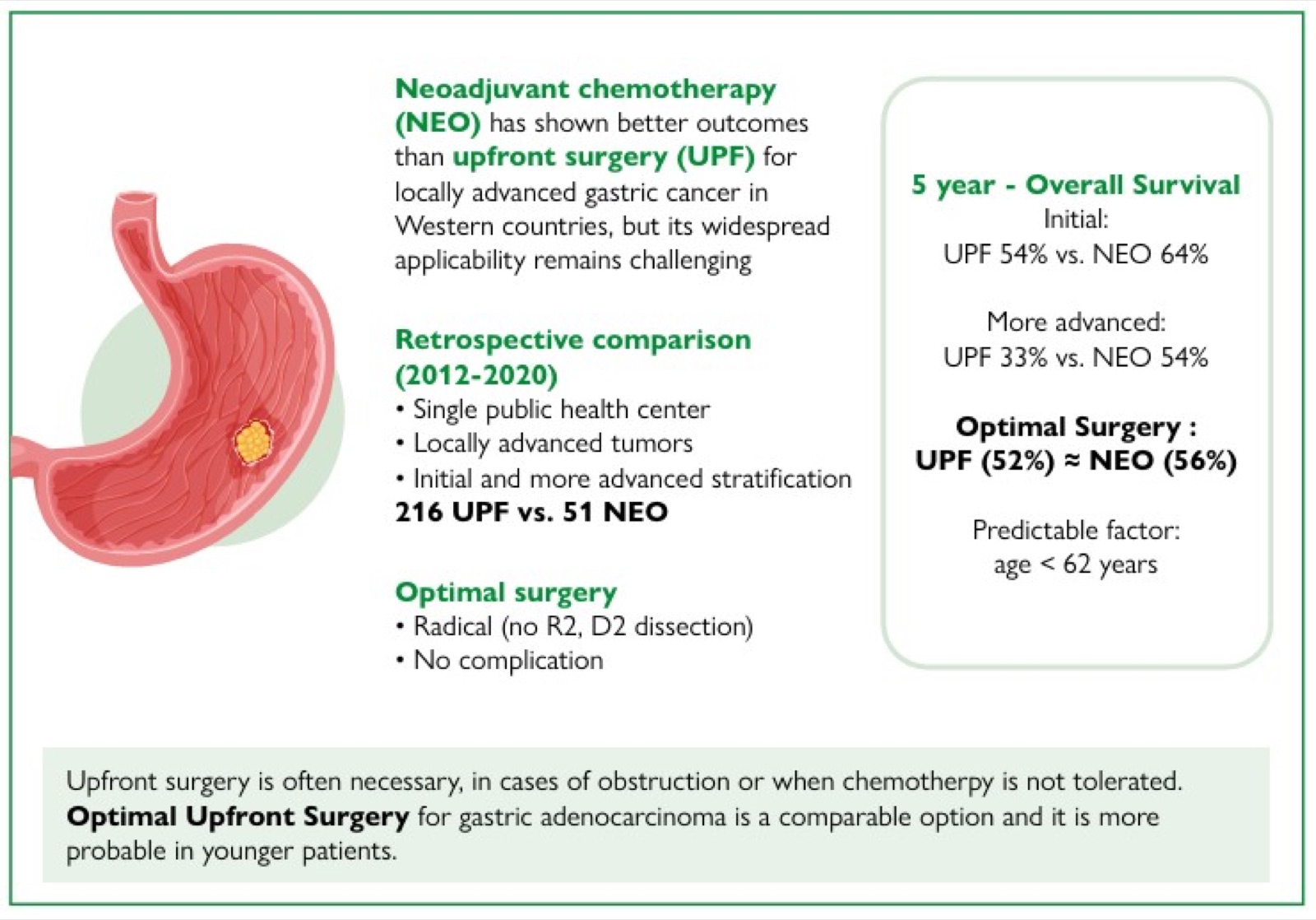
Retrospective study of 410 patients with locally advanced gastric adenocarcinoma followed between 2012 and 2020, comparing upfront surgery and perioperative treatment. Patients with early tumor (cT1N0), metastasis, and stump cancer were excluded. The comparison was stratified by stage without the influence of systemic treatment (primary stage). Resections with D2 dissection, no residual tumor (no R2), and no complications were considered optimal surgery.
Upfront resection was performed in 216 patients (85% of upfront surgeries). Gastrectomy after neoadjuvant treatment was performed in 47 cases (76% of indications), and another four were resected among 39 previous unsuccessful surgeries (10%). In total, there were 51 resections after chemotherapy. Independent factors associated with overall survival at 60 months were: preoperative chemotherapy (57.3% vs. 40.7%, p=0.029); complication rate; D2 lymphadenectomy; and primary stage. Initial cases showed a better outcome in the neoadjuvant group without statistical significance (p=0.447), but it was present in more advanced tumors (p=0.027). Optimal surgery was achieved in 68.6% of the neoadjuvant group and 51.9% of the upfront group (p=0.030) and resulted in similar overall survival (56.6% vs. 52.4%, p=0.904).
Optimal upfront surgery followed by adjuvant therapy, particularly with D2 dissection, is effective and was not statistically inferior to neoadjuvant treatment.




Developed by Surya MKT