


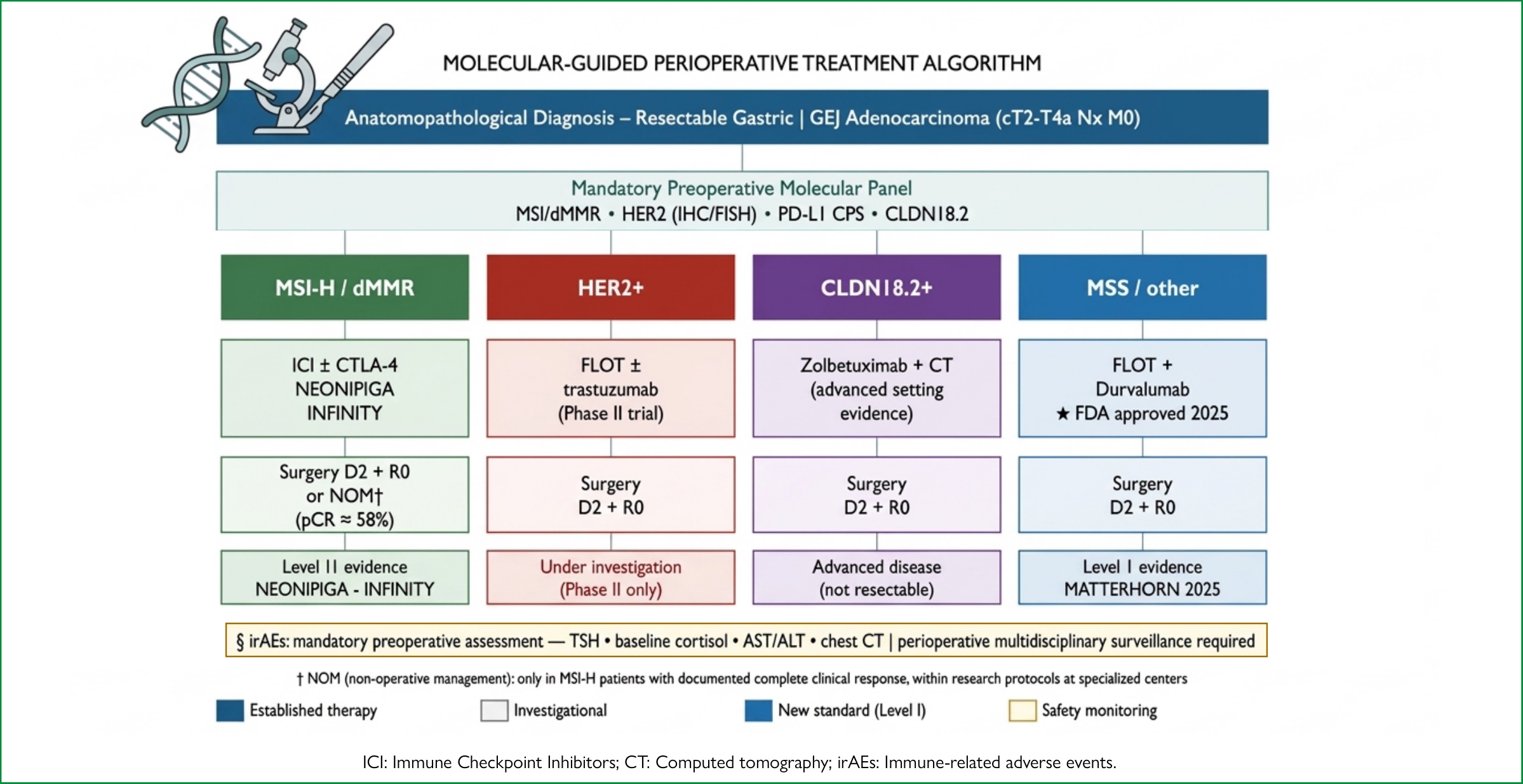
Gastric cancer ranks fifth in global cancer incidence and fourth in mortality. In patients with gastric adenocarcinoma, perioperative chemotherapy with fluorouracil, leucovorin, oxaliplatin, and docetaxel, the FLOT regimen, constitutes the current therapeutic standard. Incorporating immune checkpoint inhibitors into perioperative schemes has emerged as a promising strategy, although its clinical and surgical impact requires critical appraisal in light of current evidence.
To critically analyze contemporary scientific evidence on incorporating perioperative immunotherapy into resectable gastric adenocarcinoma management, evaluating its impact on oncologic outcomes, perioperative safety, and its role within current therapeutic algorithms.
A critical narrative review through systematic searches in PubMed/MEDLINE, Embase, and Cochrane Library using relevant terms of the Medical Subject Headings (MeSH) thesaurus.
The MATTERHORN trial demonstrated that the addition of durvalumab to FLOT significantly improves event-free survival (hazard ratio 0.71; 95%CI 0.58–0.86; p<0.001) and overall survival (hazard ratio 0.78; 95%CI 0.63–0.96; p=0.021), with a pathological complete response rate of 19.2% versus 7.2%, without increased surgical morbidity or mortality. The KEYNOTE-585 trial demonstrated improved pathological complete response with pembrolizumab, without significant overall survival benefit. Microsatellite instability-high, human epidermal growth factor receptor 2, and programmed death ligand 1 biomarkers are key determinants in therapeutic selection. Perioperative immune-related adverse events require specific surveillance.
Adding durvalumab to FLOT establishes a new perioperative standard with level I evidence. Preoperative molecular characterization is key to decision-making. Integrating immunotherapy does not compromise the feasibility of gastrectomy with extended second-level lymphadenectomy, but requires specific expertise to manage immune-related toxicities.




Developed by Surya MKT