


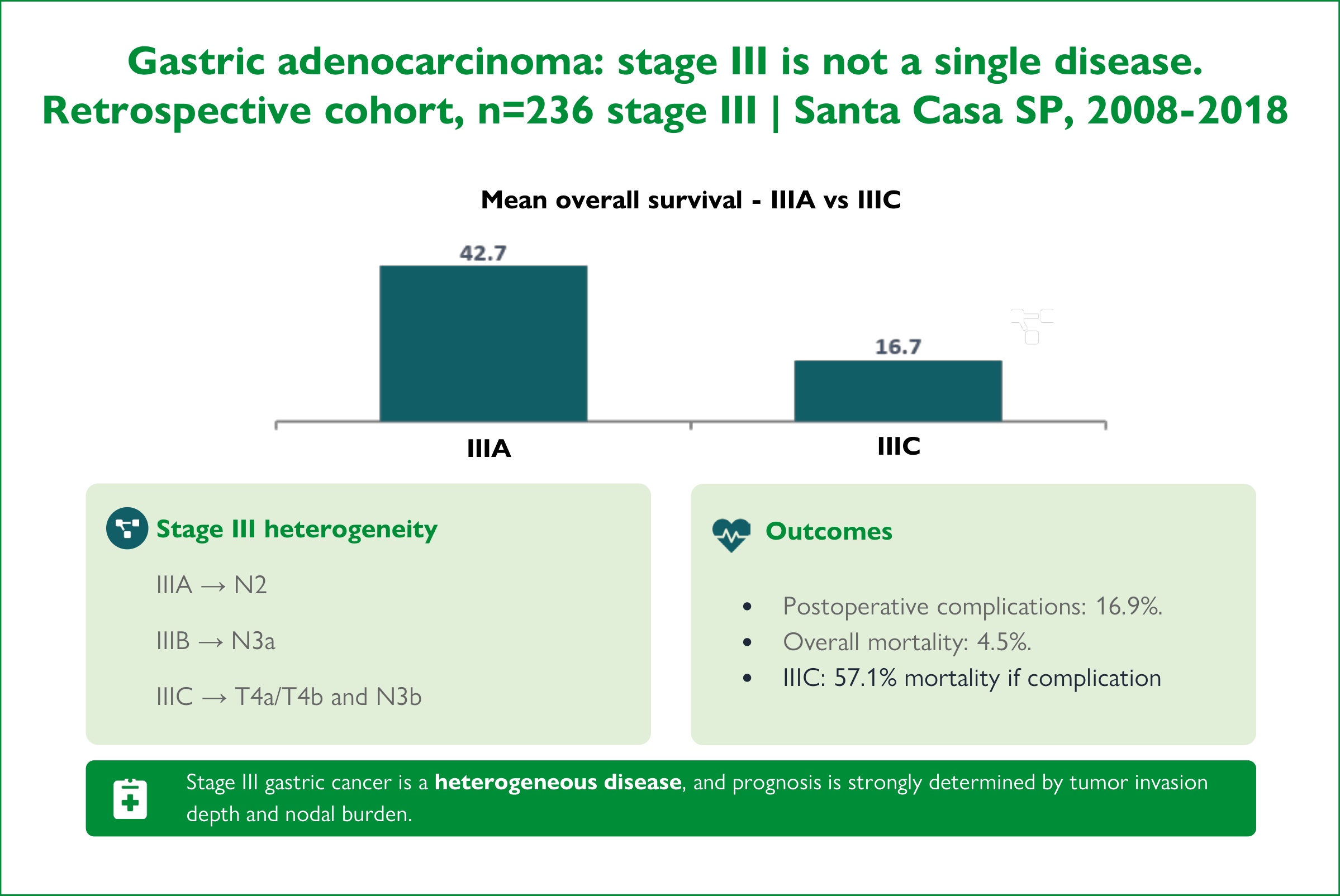
Gastric adenocarcinoma remains one of the leading causes of cancer mortality worldwide, according to the International Agency for Research on Cancer. Stage III, as defined by the 8th edition of the American Joint Committee on Cancer Tumor, Node, and Metastasis (TNM) system, comprises a biologically heterogeneous group, resulting in clinicopathological variations that directly impact prognosis and therapeutic decisions.
To evaluate the clinicopathological features, surgical morbidity and mortality, and overall survival of patients with gastric adenocarcinoma treated at a tertiary center, and to analyze prognostic differences among stage III subgroups.
This retrospective cohort study included patients treated between 2008 and 2018. Demographic variables, tumor characteristics, TNM staging (8th edition), type of surgical procedure, complications according to the Clavien-Dindo classification, and 30-day mortality were analyzed. Overall survival was estimated using the Kaplan-Meier method and compared with the log-rank test, with a significance level of 5%.
This retrospective cohort study included patients treated between 2008 and 2018. We analyzed demographic variables, tumor characteristics, TNM staging (8th edition), type of surgical procedure, complications according to the Clavien-Dindo classification, and 30-day mortality. Overall survival was estimated using the Kaplan-Meier method and compared with the log-rank test, with a significance level of 5%.
Stage III gastric adenocarcinoma demonstrates marked clinicopathological heterogeneity, which directly impacts morbidity, mortality, and survival. Lymph node involvement is a relevant prognostic determinant.




Developed by Surya MKT