


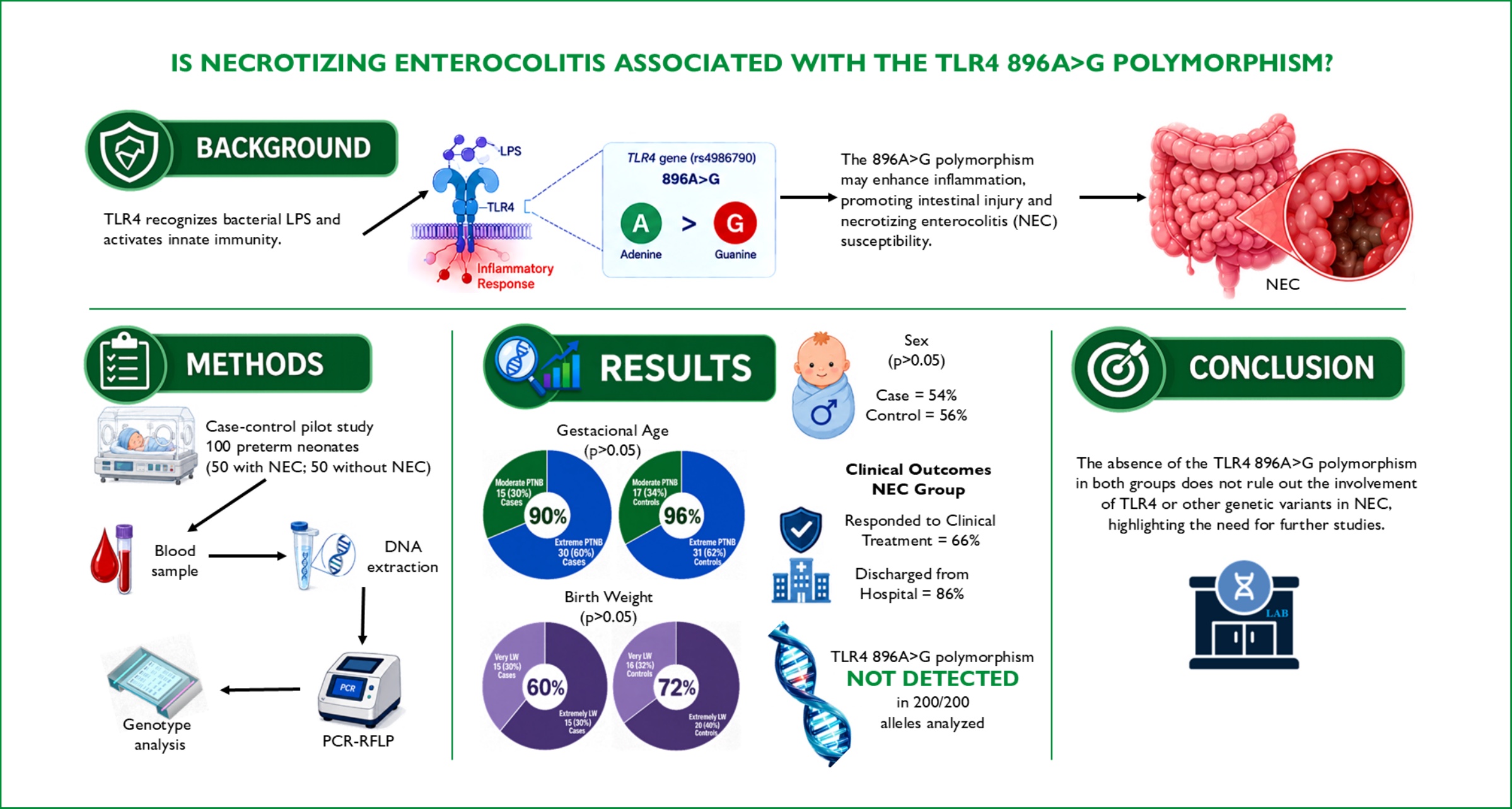
The pathophysiology of necrotizing enterocolitis (NEC) involves changes in intestinal development that hinder its functionality, leading to both metabolic and gene and phenotypic changes. Among the genetic factors the 896A/G polymorphism in the Toll-Like Receptor 4 (TLR4) gene can trigger is an inappropriate and persistent inflammatory response, leading to the progression of lesions and necrosis of the intestinal mucosa, and reduced perfusion of the microvasculature, increasing susceptibility to the disease.
To determine the prevalence of the 896A/G polymorphism in the TLR4 gene in neonates with and without NEC.
Case-control study, in which 100 neonates were evaluated, 50 diagnosed with NEC (Case Group) and 50 without the disease (Control Group), of both sexes. DNA was extracted from peripheral blood leukocytes, and the region encompassing the polymorphism was amplified by polymerase chain reaction/restriction fragment length polymorphism.
Males were predominant in both groups: Cases (54%) and Controls (56%) (p=1.0000). Moderately and extremely preterm infants were the most frequent in the Case (90%) and Controls (96%) (p=0.6132) groups. Very low birth weight and extremely low birth weight neonates were predominant in the Case Group (60%) and in the Control Group (72%) (p=0.0995). Of the 50 neonates with NEC, 66% responded positively to clinical treatment, and 86% were discharged from hospital. The 896A/G polymorphism in the TLR4 gene was not identified in the 200 alleles analyzed (100%).
The absence of the 896A/G polymorphism in the TLR4 gene in NBs with and without NEC does not exclude the possibility of alterations in this and/or other genes, highlighting the importance of additional studies to elucidate this relationship.




Developed by Surya MKT