


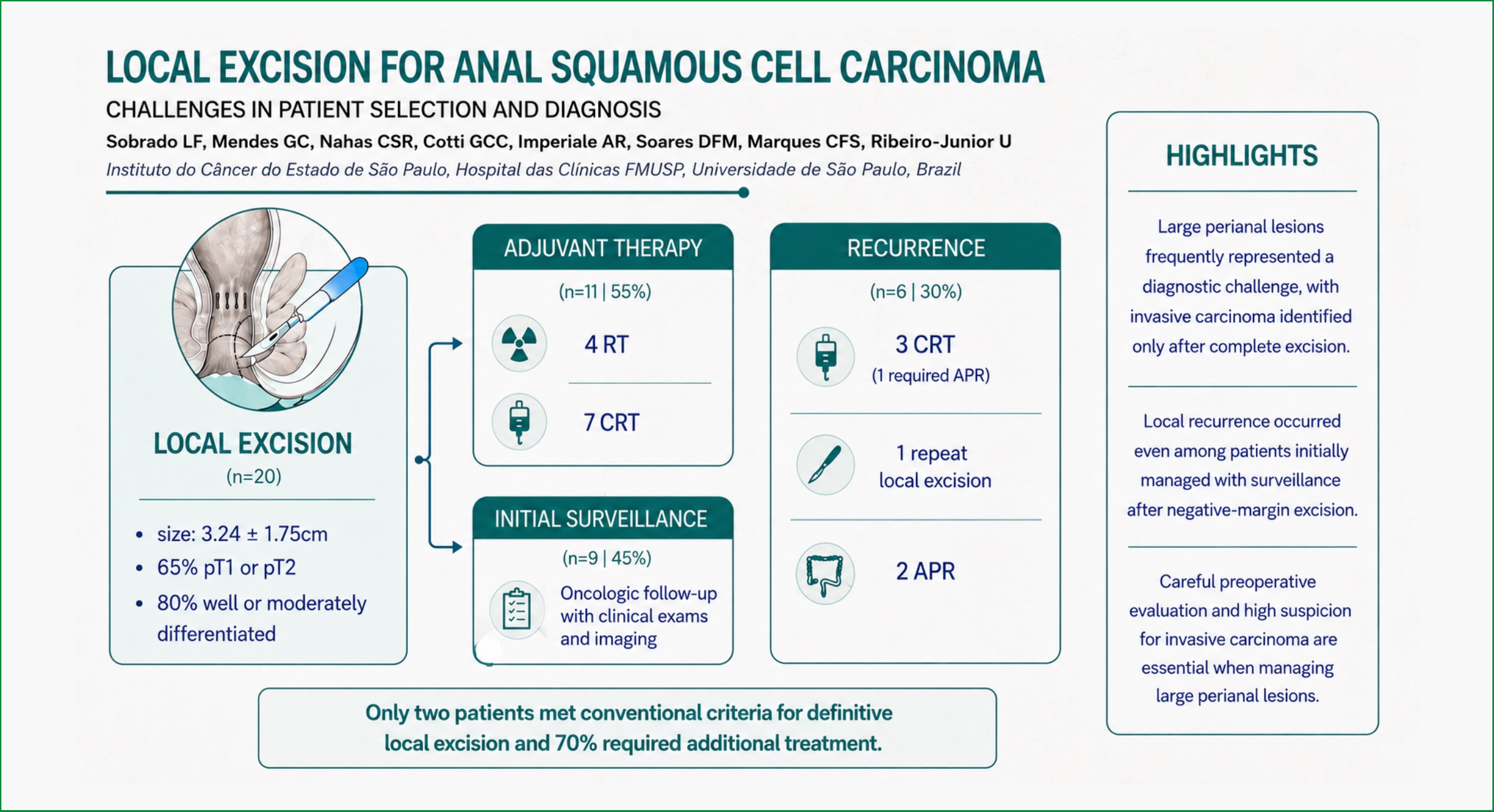
Local excision (LE) has a limited role in the management of anal squamous cell carcinoma (SCC), typically restricted to carefully selected early-stage tumors. However, in clinical practice, LE is often performed in broader contexts, particularly in patients with large perianal lesions without prior confirmation of invasive carcinoma, in whom diagnostic uncertainty may influence treatment decisions.
To evaluate oncologic outcomes after LE for anal SCC, with particular emphasis on the role of lesion characteristics, diagnostic uncertainty, and treatment patterns in real-world practice.
This was a retrospective study of patients with anal SCC who underwent LE as primary treatment and were followed at a tertiary cancer center between 2010 and 2024. Clinical, pathological, and treatment data were collected, including tumor characteristics, margin status, use of adjuvant therapy, and oncologic outcomes.
A total of 20 patients with invasive anal SCC were included. The mean tumor size was 3.24 cm (standard deviation ±1.75 cm), with lesions up to 6.9 cm. No patients received chemoradiotherapy before LE. Only two patients met conventional criteria for LE (<2 cm, well or moderately differentiated tumors). Overall, 14 patients (70%) required additional treatment following LE, including chemoradiotherapy or abdominoperineal resection. Among patients initially managed with surveillance, 44% developed local recurrence, even in cases with negative margins.
Outcomes following LE for anal SCC are strongly influenced by patient selection and clinical context. In this real-world cohort, most patients outside established criteria required additional treatment, underscoring the limitations of LE in large perianal lesions. These findings highlight the importance of careful preoperative evaluation and maintaining a high index of suspicion for invasive carcinoma to guide appropriate initial management.




Developed by Surya MKT