

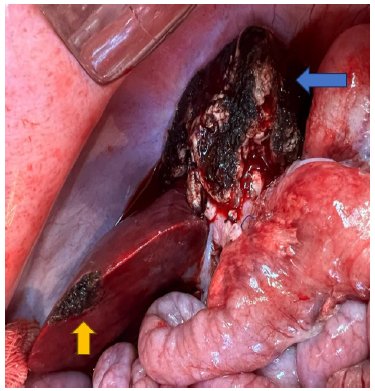
Small-for-size syndrome (SFSS) is a serious complication after partial liver transplantation or extended hepatectomy. Despite advances, the syndrome remains a complex entity with a multifactorial pathophysiology and a lack of standardized therapeutic approaches.
This study aims to establish a translational model of porcine SFSS, integrating hemodynamic, histopathological, and molecular analyses to quantify the tissue expression of biomarkers to assess liver regeneration.
Ten liver transplants were performed: eight with small (partial) for size (donors underwent a 70% hepatectomy) and two with whole liver. The recipients were followed until death (euthanasia due to severe morbidity) or for five days. Hemodynamic data, laboratory analyses, and liver tissue biopsies were collected. Immunohistochemistry was performed to assess the expression of TNF-α, IL-1β, NF-κB, and VEGF. Gene expression levels of VEGF, IL-6, IL-10, and NF-κB were quantified using reverse transcription polymerase chain reaction.
In the partial group, survival rates were 75% in the immediate postoperative period, 25% at 48 hours, and 12.5% at five days. Immunohistochemistry showed a significant increase in TNF-α and NF-κB proteins after reperfusion and at the end of surgery, respectively. Gene expression analysis showed a significant increase in IL-6 and IL-10 at the end of surgery.
This study represents a methodological advance by performing the first integrated evaluation of protein and gene expression (TNF-α, IL-6, IL-1, IL-10, VEGF, and NF-κB) correlated with hemodynamic, histopathological, and functional parameters in the small-for-size pig model.




Developed by Surya MKT