


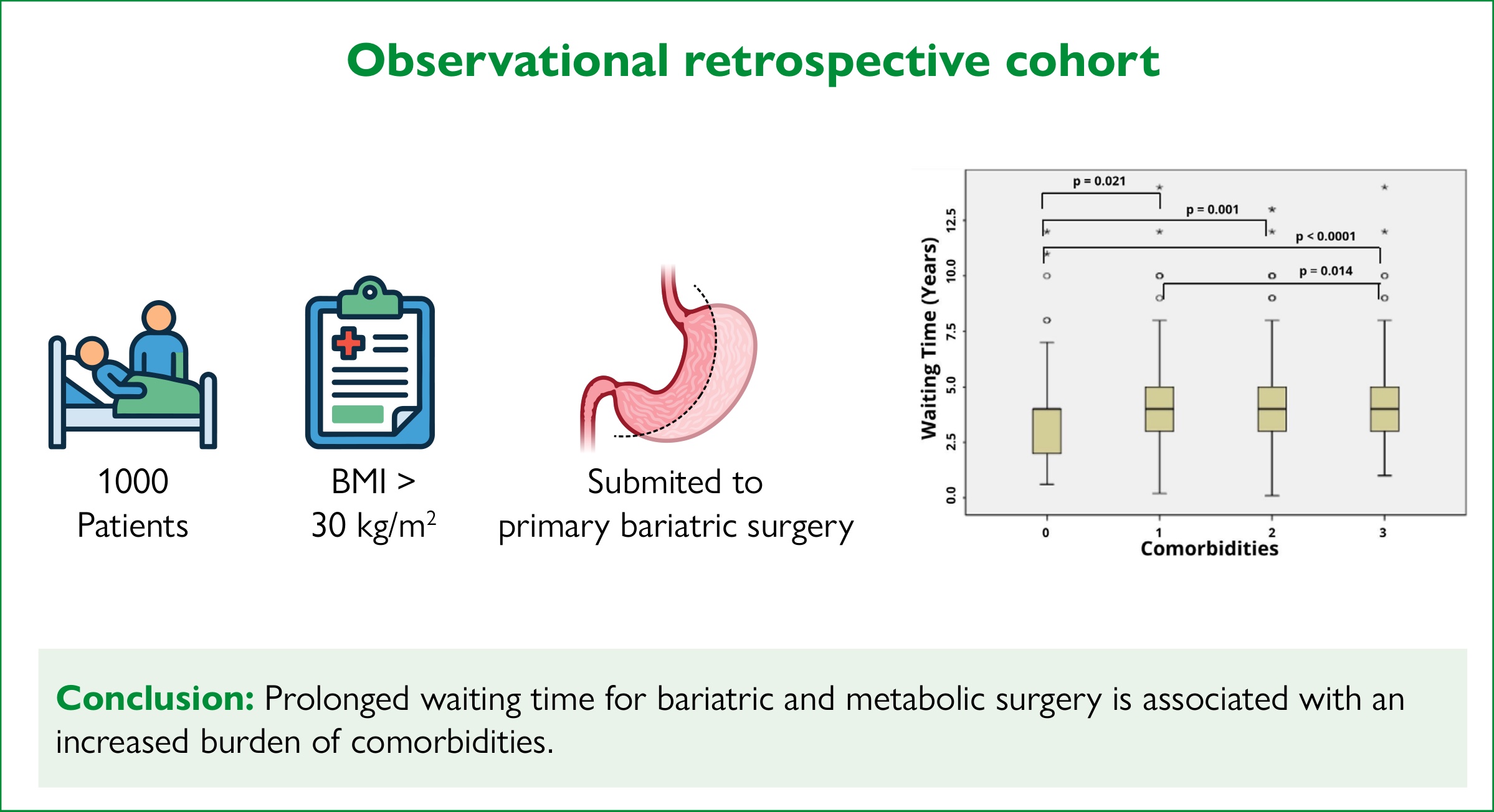
Obesity is a multifactorial disease with a high prevalence that leads to several comorbidities, posing significant challenges for healthcare systems. Bariatric and metabolic surgery (BMS) has been established as the most effective treatment for patients with obesity; however, in Brazil, limited access remains a critical barrier.
This study aimed to evaluate the clinical, demographic, and metabolic characteristics of patients with obesity undergoing BMS in the Brazilian Unified Health System and to analyze the relationship between waiting time and comorbidities.
A retrospective cohort study was conducted involving 1,000 patients with obesity who underwent treatment between July 2022 and June 2024. Clinical, anthropometric, and laboratory variables were analyzed using regression analysis and statistical tests to assess the association between waiting time and comorbidities.
A significant correlation was found between prolonged waiting time and an increased number of comorbidities (R²=0.686; p<0.001). Furthermore, the number of comorbidities explained 60% of the variability in waiting time (R²=0.600; p<0.001), with a mean increase of 1.92 years for each additional comorbidity (95%CI 1.82–2.02). Patients on the waiting list for more than 10 years had higher rates of hypertension, type 2 diabetes, and dyslipidemia. Waiting time also had an impact on some metabolic syndrome parameters, including glycated hemoglobin (Hb1Ac) (r=+680, p=0.031), low-density lipoprotein (LDL) (r=+640, p=0.044), and total cholesterol (r=+830, p=0.008).
Prolonged waiting time for bariatric and metabolic surgery is associated with an increased burden of metabolic comorbidities and their consequences.




Developed by Surya MKT