

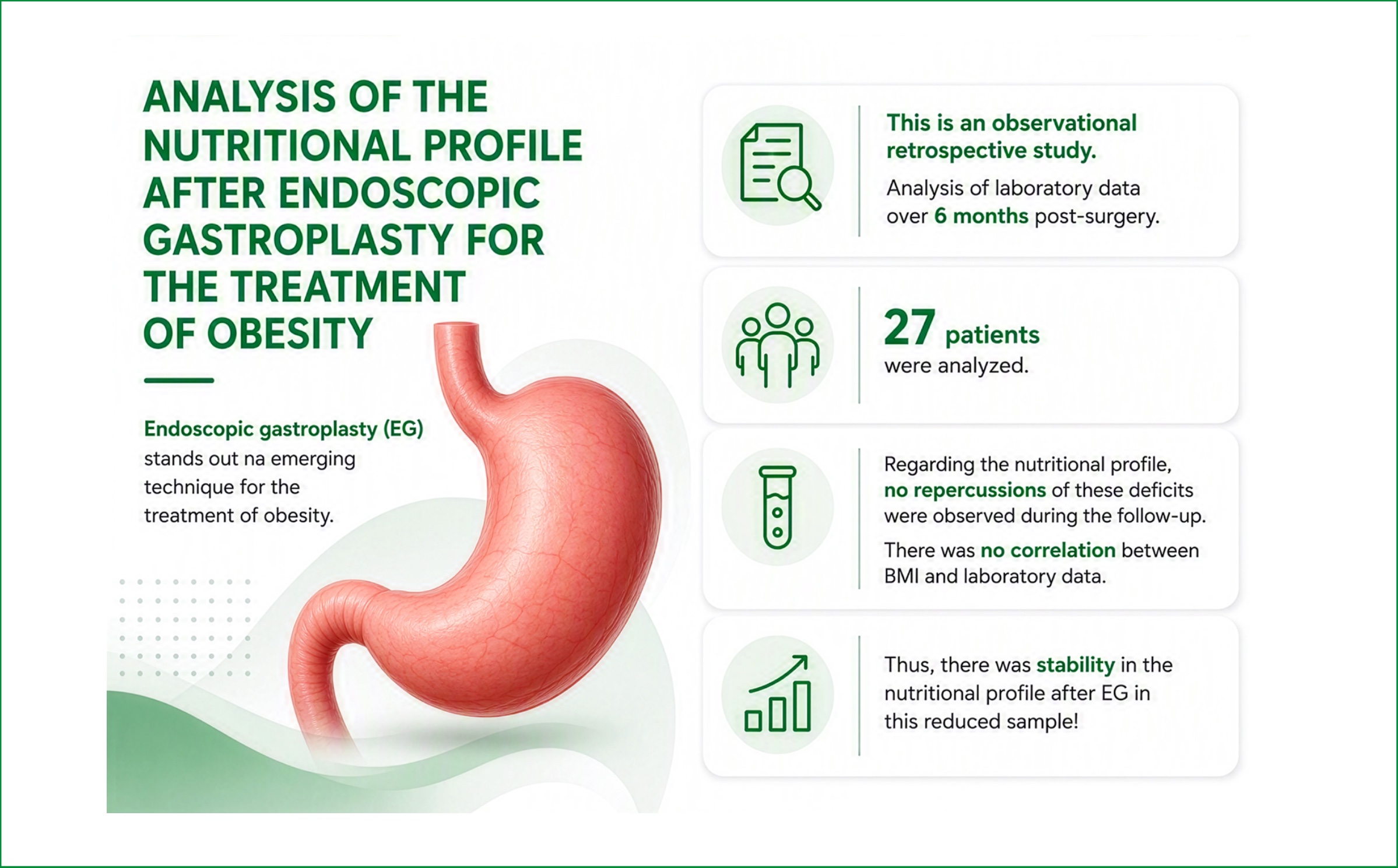
Endoscopic gastroplasty (EG) has emerged as a promising technique for the treatment of obesity. However, data on the nutritional profile of patients after this surgical procedure are scarce in the literature.
To analyze the nutritional profile of patients who underwent EG for the treatment of obesity during the postoperative period.
This retrospective observational study investigated medical record data from a private healthcare service in Salvador, Bahia, where EG was performed EG. Epidemiological and laboratory data (total protein, albumin, calcium, zinc, vitamin B12, 25-hydroxyvitamin D, hemoglobin, glucose, glycated hemoglobin, ferritin, and iron) were collected before and after surgery over a 6-month period. A p-value>0.05 was considered statistically significant.
Twenty-seven patients were analyzed, with a mean age of 43.8 (±13.3) years, of whom 88.9% were female. The patients’ initial body mass index (BMI) was 35.31±8.7 kg/m2. Total weight loss was 10±5.7, and excess weight loss was 41.1±28.1. Preoperatively, iron deficiency was observed in 1 patient, vitamin B12 deficiency in 2 patients, 25-hydroxyvitamin D deficiency in 2 patients, zinc deficiency in 1 patient, calcium deficiency in 2 patients, and hyperglycemia in 4 patients. No consequences of these deficiencies were observed during follow-up. There was no correlation between BMI and laboratory data (p>0.05).
The nutritional profile remained stable before and after EG, with sustained weight loss.




Developed by Surya MKT