


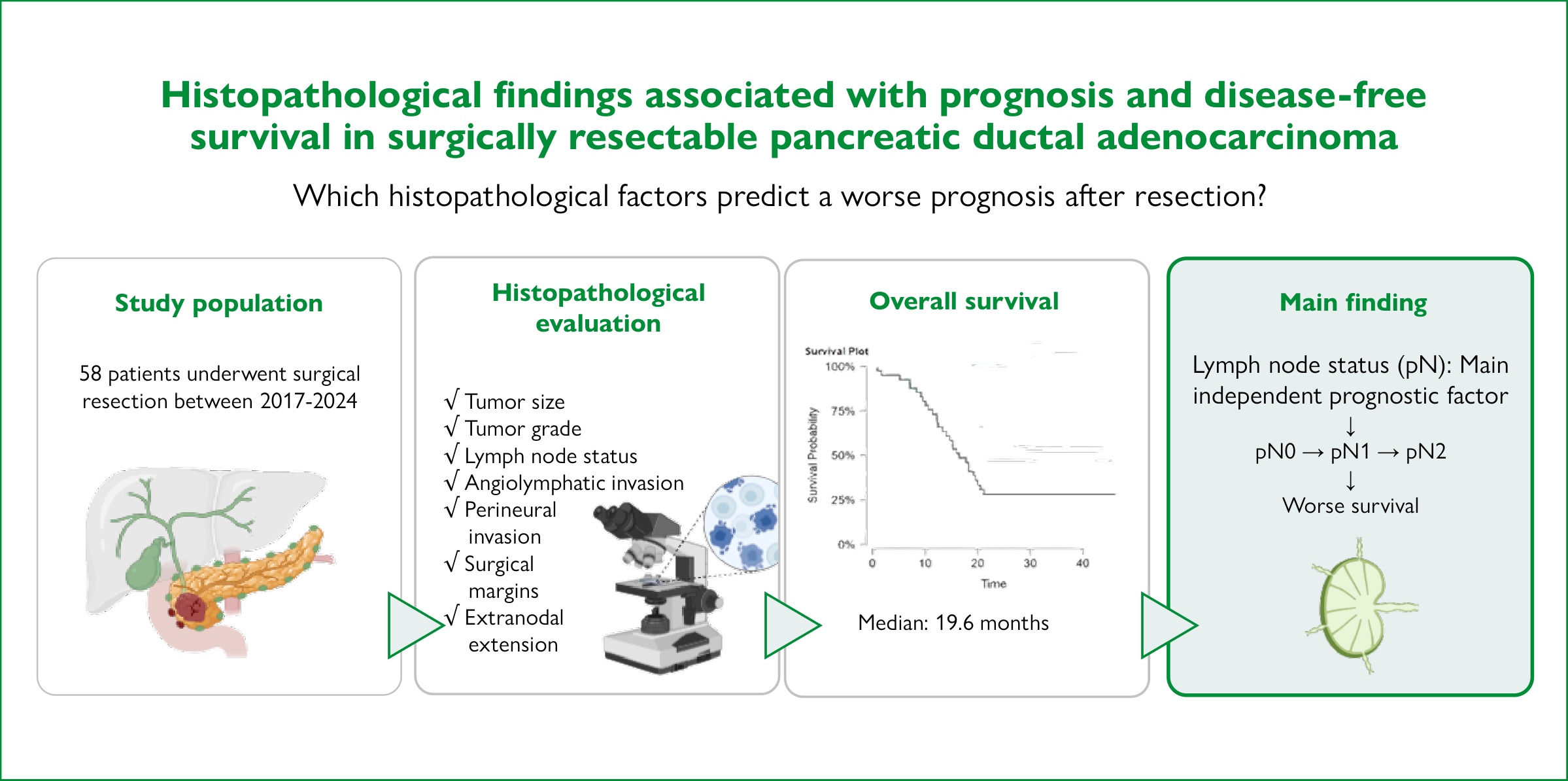
Ductal adenocarcinoma of the pancreas is among the most lethal neoplasms of the digestive tract. It is frequently diagnosed at advanced stages and associated with limited overall survival, even after surgical resection with curative intent. Although pathological staging is fundamental for prognostic stratification, patients with similar anatomical stages may have distinct clinical outcomes, suggesting that additional histopathological factors influence disease evolution.
This study aimed to assess the prognostic impact of histopathological variables on the overall survival of patients with ductal adenocarcinoma of the pancreas who underwent surgical resection, with emphasis on lymph node involvement and angiolymphatic invasion.
This observational, retrospective study included patients who underwent surgical resection for ductal adenocarcinoma of the pancreas at a tertiary hospital between 2017 and 2024. Clinical, anatomopathological, and therapeutic data were obtained by reviewing medical records and histopathological reports. Overall survival was estimated using the Kaplan-Meier method, and prognostic factors were analyzed using univariate and multivariate Cox regression models.
A total of 58 patients were included. Lymph node metastases were identified in approximately half of the cases, and angiolymphatic invasion was frequently observed. During follow-up, more than half of the patients died. The median overall survival was 19.63 months. In the univariate analysis, lymph node involvement, lymph node ratio, extranodal extension, and angiolymphatic invasion were associated with worse overall survival. In the multivariate analysis, lymph node status maintained an independent association with worse prognosis, with a progressive increase in risk according to nodal stage, as did angiolymphatic invasion.
Lymph node involvement and angiolymphatic invasion are independent prognostic factors associated with worse overall survival in resected ductal adenocarcinoma of the pancreas. Systematic evaluation of these histopathological variables can support better prognostic stratification, helping individualize postoperative treatment.




Developed by Surya MKT