


Iatrogenic ureteral injuries (IUI) are rare surgical complications in abdominopelvic surgeries, with an incidence varying between 0.15 and 1.0%.
To evaluate the incidence of IUI in elective colorectal surgeries performed in a tertiary university hospital.
This is a retrospective analysis of patients operated from 2004 to 2022, who presented IUI. Demographic data, underlying disease, predisposing factors, surgery access, location of the lesions and their characteristics, diagnosis time, treatment carried out, and follow-up were analyzed.
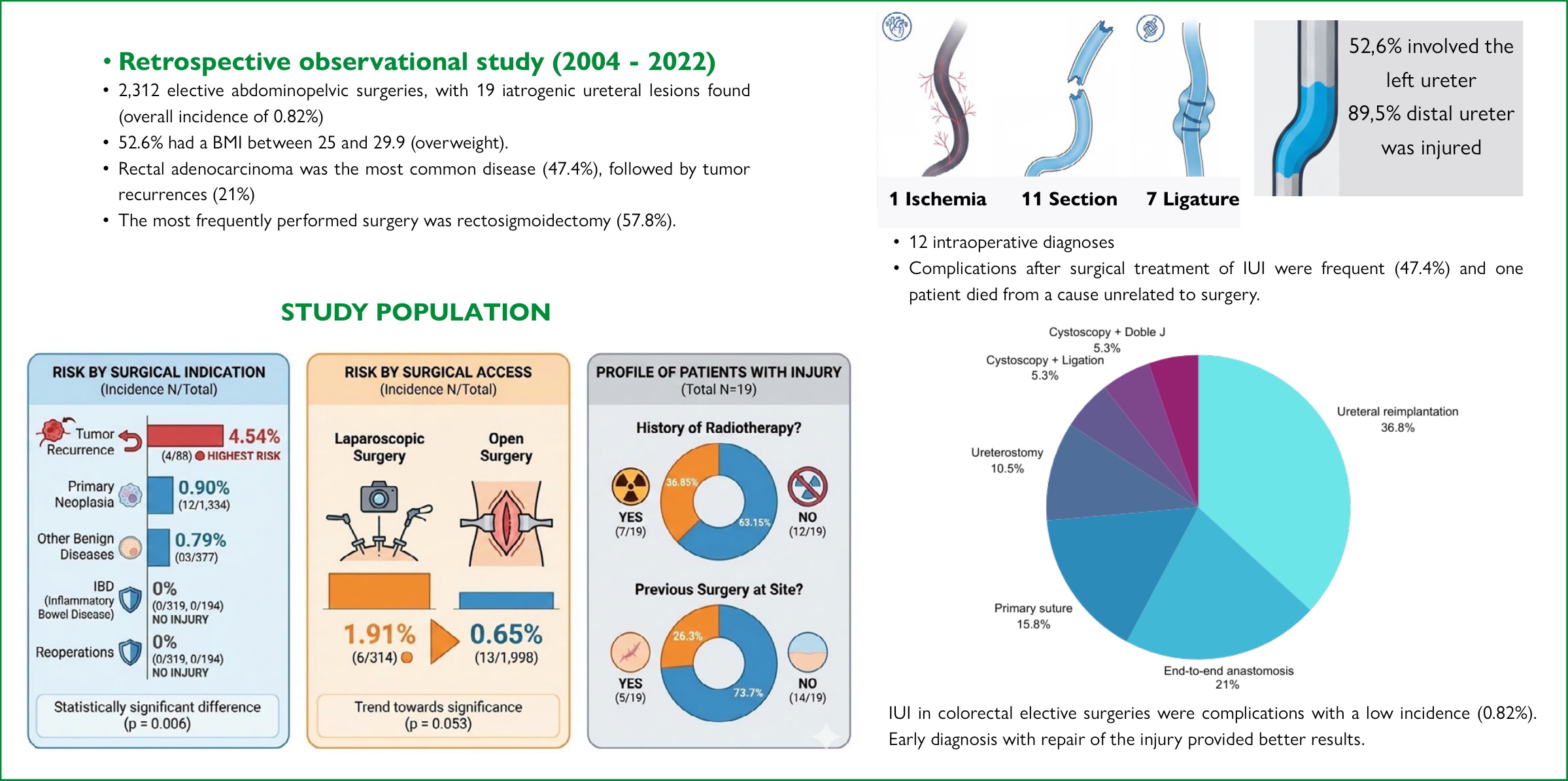
In the period, 2,312 abdominopelvic surgeries were performed, of which 1,998 were open and 314 were laparoscopic, with 19 IUI (0.82%). The mean age was 55.6 years, 57.9% were male, and 89.5% were white. The majority of patients were overweight (52.6%), and 73.7% had a history of abdominal surgery. Primary rectal adenocarcinoma was the most common disease (47.4%), followed by tumor recurrences (21.0%). IUI occurred in 1.91% of laparoscopic surgeries and 0.65% of open surgeries (p=0.053); patients with tumor recurrence presented more IUI than those with primary tumors or benign diseases (p=0.006). They were commonly observed in the left ureter (52.6%) and in the distal portion (89.5%), the main mechanism being the section (57.9%). Intraoperative diagnosis occurred in 12 patients (63.2%). IUI correction was predominant in ureteral reimplantation and end-to-end ureteral anastomosis. Postoperative complications were common (47.4%), and one patient died from causes unrelated to surgery.
IUI presented low incidence in colorectal elective surgeries and were more frequent in surgeries for tumor recurrences, in the left ureter and the distal third. Early diagnosis with repair of the injury provided better results.




Developed by Surya MKT