


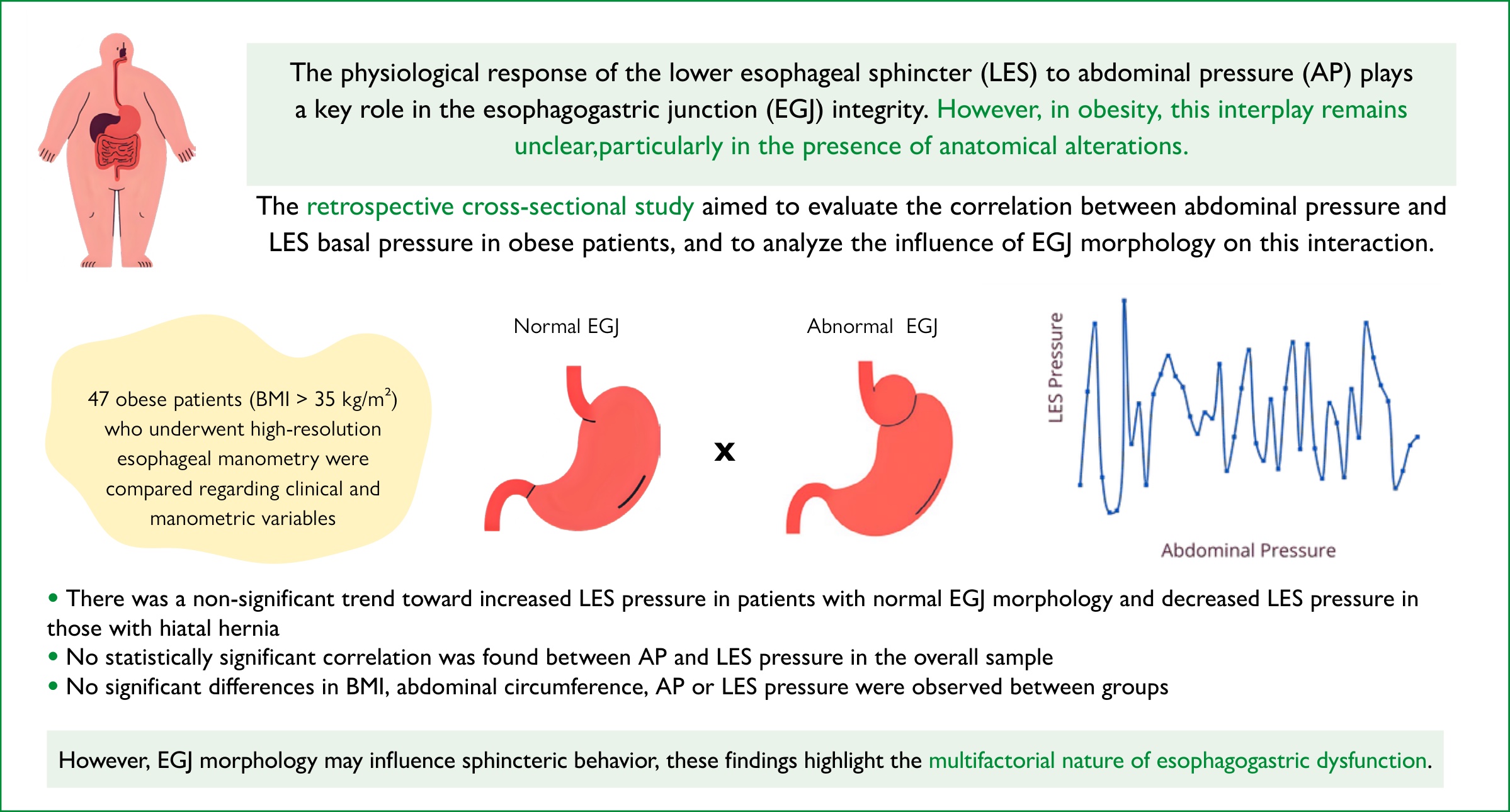
The physiological response of the lower esophageal sphincter (LES) to abdominal pressure (AP) plays a key role in the esophagogastric junction (EGJ) integrity. However, in obesity, this interplay remains unclear, particularly in the presence of anatomical alterations.
This study aims to evaluate the correlation between abdominal pressure and LES basal pressure in obese patients, and to analyze the influence of EGJ morphology on this interaction.
This retrospective cross-sectional study included 47 obese patients (BMI>35 kg/m2) who underwent high-resolution esophageal manometry. Patients were divided into two groups based on EGJ morphology: normal (Type I) and abnormal (Types II/III, hiatal hernia) and were compared based on clinical and manometric variables. Correlation analyses between AP and LES pressure were performed for the entire sample and stratified by EGJ morphology.
No statistically significant correlation was found between AP and LES pressure in the overall sample (rho=0.05; p=0.737). In the subgroup analysis, there was a non-significant trend toward increased LES pressure in patients with normal EGJ morphology (r=0.26; p=0.150) and decreased LES pressure in those with hiatal hernia (r=-0.39; p=0.131). No significant differences in BMI, abdominal circumference, AP, or LES pressure were observed between groups.
In obese individuals, abdominal pressure does not show correlation with LES pressure. However, EGJ morphology may influence sphincteric behavior, with a trend toward LES pressure increase in normal EGJ and reduction in altered morphologies. These findings highlight the multifactorial nature of esophagogastric dysfunction.




Developed by Surya MKT