


Bronchopulmonary aspiration occurs when food or fluids enter the lower airways, potentially causing hypoxia, aspiration pneumonia, and even death. Prevention requires early identification of risks and action by a multidisciplinary team. Continuous team education, using well established protocols, is essential to reinforce preventive measures and improve healthcare.
Based on the well-established protocols, evaluate the impact of training on professional learning and the incidence of bronchopulmonary aspiration.
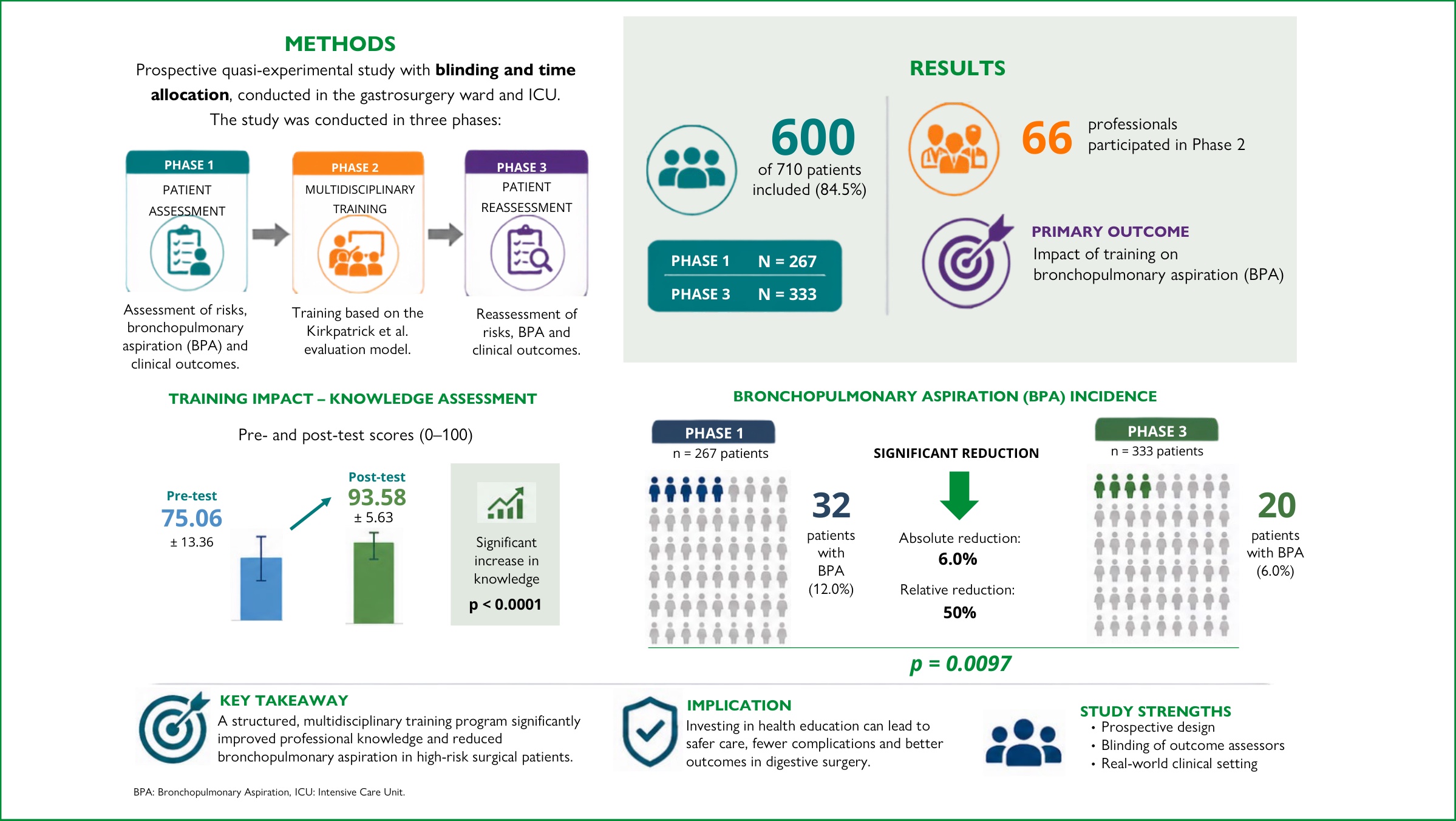
A prospective, blinded, time-allocated, quasi-experimental study conducted in the gastrointestinal surgery ward and intensive care unit. The study was divided into three phases: patient assessment, multidisciplinary training based on the well-established protocols, and patient reassessment regarding risks, bronchopulmonary aspiration, and outcomes.
The study included 600 of the 710 patients evaluated, distributed in two phases: Phase 1 (n=267) and Phase 3 (n=333). Sixty-six professionals participated in Phase 2. The impact of training on bronchopulmonary aspiration was assessed through pre- and post-training assessments. The score increased significantly (pre-test: 75.06±13.36; post-test: 93.58±5.63; p<0.0001). In Phase 1, 32 patients presented with bronchopulmonary aspiration; in Phase 3, this number was 20, a significant difference (p=0.0097).
Training proved effective in preventing bronchopulmonary aspiration and improving clinical outcomes, with a positive impact at all levels of the protocol employed. The results reinforce continuing education as a strategy for patient safety and risk management, suggesting its application in other healthcare settings.




Developed by Surya MKT