


Hepatocellular carcinoma is a major cause of cancer-related mortality and represents a growing public health challenge.
To develop multidisciplinary evidence-based recommendations for the prevention and early detection of hepatocellular carcinoma.
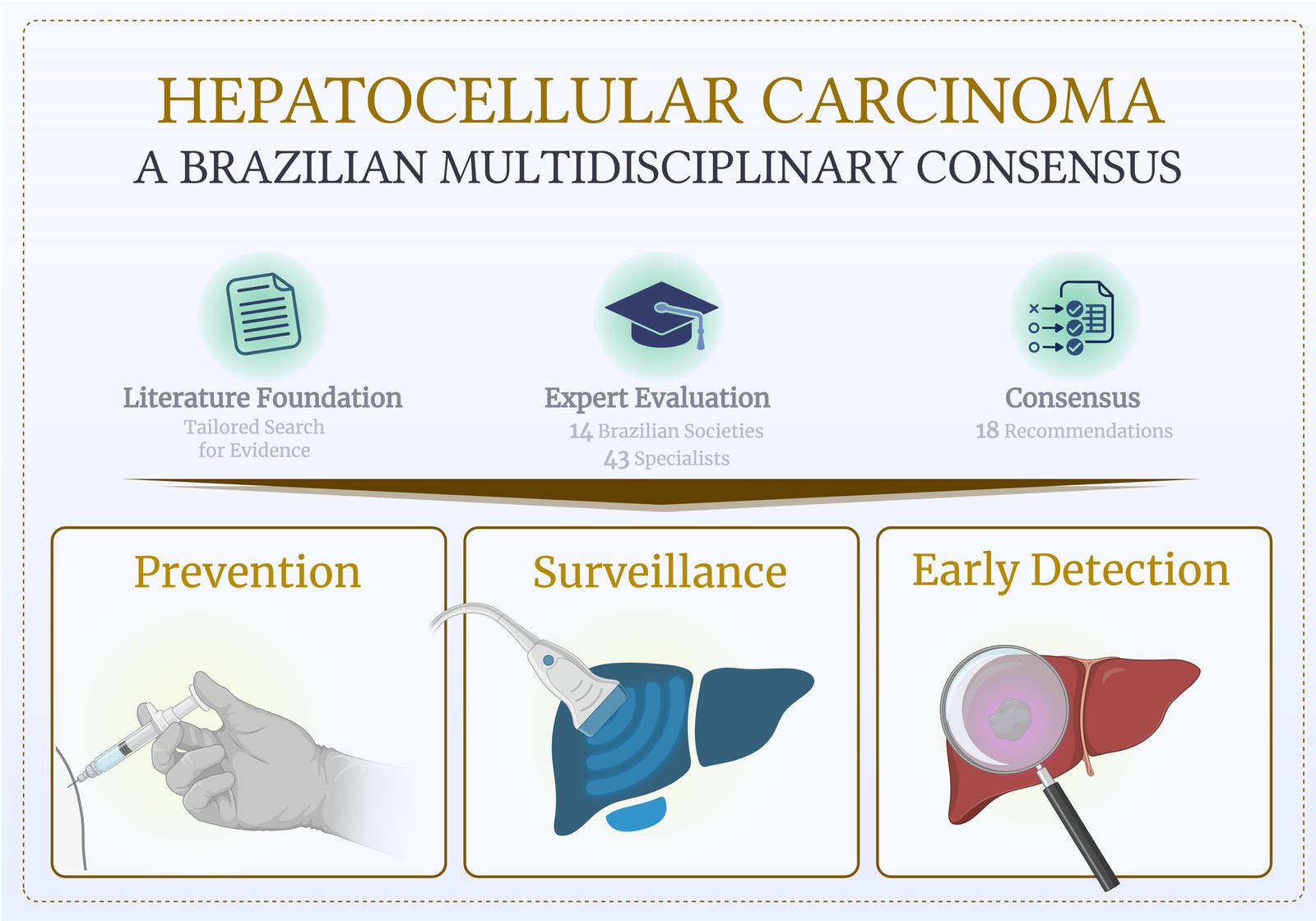
This consensus was coordinated by the Brazilian Society of Surgical Oncology, with the participation of 13 additional national societies. A steering committee defined the key clinical questions addressing prevention, surveillance, and early detection strategies. Recommendation statements were informed by a comprehensive, non-systematic review of the literature conducted using PubMed, Scopus, and the Cochrane Library.
Eighteen recommendations reached consensus, covering three main domains: 1. Primary prevention, including HBV vaccination, timely antiviral therapy for viral hepatitis, and lifestyle interventions for metabolic dysfunction. 2. Secondary prevention, outlining risk-based surveillance strategies for patients with advanced fibrosis or cirrhosis due to hepatitis B virus, hepatitis C virus, or metabolic dysfunction-associated steatotic liver disease. 3. Operational standards for surveillance, emphasizing ultrasound as the cornerstone of monitoring, the importance of structured reporting, management of small nodules, and the selective use of cross-sectional imaging.
These multidisciplinary recommendations provide practical, adaptable guidance for the prevention, surveillance, and early detection of hepatocellular carcinoma. This guidance document aims to reduce the burden of hepatocellular carcinoma and support better clinical outcomes across diverse healthcare settings.




Developed by Surya MKT